Monday, July 27, 2015

The Explorers: Making the Shire Go Global

T.E. Lawrence


A good friend from Nashville visited last week and she wondered out loud why New Hampshire is allowed such an outsized role in our nation's politics. This place is so...White! It's so homogeneous.  Tennessee  may be more representative of the push and pull going on in the country than this state of happy little shires populated by Hobbits. 

She is not the first to make that point, but in a way I like the idea of New Hampshire, the prototypical Hobbit shire sending it's people and ideas out into the world. There are some, admittedly small in number but large in heart and mind, who launch themselves from their shires into the world and go to China or South America or Europe and see all that through the clear lenses they developed in Hampton and return with that and they bring what they grew in New Hampshire to the places they explore.

She is actually unusual in that she had the intellectual daring to learn Japanese, having grown up in North Carolina, and she made an impressive career working for law firms and various groups as an American who was fluent in Japanese and who understood the culture. Getting an American mind to bend to the Asian world is challenging and requires courage and persistence. 

People who leave the comfortable and explore have often been malcontents, restless because they did not feel they really fit into the safe, comfortable world their parents had organized for them.  

Lawrence of Arabia was typical in that sense--said to have been homosexual and certainly not enamored of British imperial culture, he sought the exotic and embraced it in Arabia. 
Hemingway and Friends

Hemingway was not happy and snug at home and that led him to Europe, where he learned French and Spanish and rejected the familiarity of the American Midwest and he discovered the joys and risks of life in Spain, France and Germany. And he brought home those adventures and insights and made his home country more aware and educated in the process. 

Douglas Paal
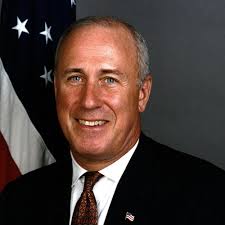
In the roiling sixties, many college kids began questioning whether America really was the best place on earth, but our generation had not had enough experience of other places to be very sure what we could take from the rest of the world which was of any value. Back packing through Europe had its vogue, still does. Those brief forays, with the security of supportive parents back home, likely helped broaden minds back home in provincial America, but did not change the basic insularity of American thought, especially in places like the South and West and Midwest where few people ever ventured out into the rest of the planet.  At college, Doug Paal was a thoughtful, but clearly detached observer of what was swirling around him. He was on the college newspaper, which brought him into the campus whirl and buzz, but he remained apart in many ways. He wound up going to China, learning the language and served in the White House and now in a consulting capacity to help America deal with that inscrutable power across the Pacific. He managed to be an expatriot who remained oriented toward America, to bring home China to the United States.


Deb and James Fallows
Neither James nor Deb Fallows could be described as outsiders in their own country--Harvard educated, products of nurturing families, they nevertheless felt compelled to explore.  I think of them as something like members of that Explorers Club Jules Verne described in "Around the World in 80 Days" seated in London, where explorers returned to their plush leather chairs and their port wine to regale their colleagues with tales of what they saw in India, Polynesia and Africa. James Fallows provided a significant service to his homeland when he wrote "More Like Us" in the midst of the era when Japan seemed to be overtaking and replacing the United States economically and as a world power. Presciently, Fallows said Japan actually has more demons and burdens than we did and their culture of conformity and suppression of dissent and insistence on harmony when self criticism would be healthier did not put them in a good position to adapt to a changing world. He argued America, with its capacity for self examination and improvement would ultimately do better if only we decided to be "more like us," i.e. to cleave to what makes us strong--our diversity and energy and imagination.


Gauguin brought home his colors and his palate from Polynesia to France, where van Gogh learned from him and the world is in debt to that intermingling.


We are told we are living in the new global economy, but exploration and interaction is as old as mankind roaming out of Africa, as old as the Silk Road and men in ships heading from Viking land toward Newfoundland and from Spain to the Caribbean. It has occurred, for much of man's history as part of war, from the Crusades to World War II. 

The difference now is that a boy who grew up in North Carolina and became an accountant for a big American firm now finds himself in Hong Kong and Beijing with some regularity and he brings all that home to his workplace, his community and his family.  The numbers in this group will overwhelm the numbers of artists, academics and government types. They may actually change America and the world. 

But it takes courage and it takes vigor and persistence. The question is, will we have the wisdom to support those who are willing to launch?


Thursday, July 23, 2015

Planned Parenthood in the Cross Hairs


"I’ve seen these two videos. They’re gruesome and I think they’re awful. That’s why the Energy and Commerce Committee and Judiciary Committee are doing an investigation. I expect that we will have hearings, and the more we learn, the more it will educate our decisions in the future.”
John Boehner


Videotapes, surreptitiously obtained by anti abortion groups, and cut artfully, suggest that some Planned Parenthood officials negotiated to sell the tissue obtained at the time of abortions (D&C, dilation and curretage or vacuum extraction) for fun and profit. Ah, now we see why Planned Parenthood does abortions: They are selling body parts for profit! The truth about these videos was exposed by the New York Times and it turns out the officials rejected some offers and asked questions about others. Planned Parenthood, and most university hospitals, provide tissue from such procedures for stem cell research, among other things, but does not profit from this practice.  The whole video scam was just that, a set up and a fraud.

But Republicans are asking no questions: It's something they want to believe--Planned Parenthood is a wicked organization whose bird ought to be the Red Tail Hawk because it rips its victims limb from limb.

What mystifies me is why anti abortion groups and the Republican party are so determined to kill Planned Parenthood. By far the greatest number of patients they see are not for abortions but for the very thing which makes abortions unnecessary: Effective contraception.

I understand, if you think abortion is murder and some Planned Parenthood facilities do abortions, you'd want to protest that and try to shut them down, but most PP facilities do contraception not abortion, so why attack those?  If the patient has a festering wound in her thigh, would you stab the patient in the heart to kill the abscess? 

Just another line of reasoning in the Republican hymns and verses which mystifies.

The Other: Obama and Fear of the Alien


 “We have in the United States today hard-core, indigestible blocs which have not become integrated into the American way of life, but which, on the contrary are its deadly enemies. Today, as never before, untold millions are storming our gates for admission and those gates are cracking under the strain.”

--
Senator Pat McCarran 


When Donald Trump says he sent agents to Hawaii to investigate the authenticity of Barack Obama's birth certificate and "You wouldn't believe what they are finding." He was correct. I do not believe what Mr. Trump was implying and, in fact, Mr. Trump never released what they "found," presumably because it would have been too disturbing to the American psyche.

This is not a new phenomenon in American life. Ever since the first English colonists arrived, people who arrived earlier than the next wave of immigrants expressed alarm and resentment about those who followed.  So, in one era "No Irish Need Apply" signs were posted in store and factory windows. 

In fact, as current as Senator McCarran's remarks (above) may seem, they were made in 1952 in support of his "act" which set quotas for immigrants from various (undesirable) countries of origin.

Of course, President Barack Obama will always seem like an alien to some: He was born in Hawaii, our most remote state, to a Kenyan father, and he came of age in Chicago, a very American city, but Obama was working with the dispossessed and the flotsam of our society, and he grew up, in part, in Indonesia, on the far side of the world, consorting with Muslims.

But for me, oddly, he seems far more familiar and understandable than Mr. Trump and certainly I'm more comfortable with him than with George W. or Lindsay Graham,  Rick Walker or any of the Republican jackasses who bray and say such offensive things in virtually every utterance.  I could see sitting on the sea wall with Barack Obama,  eating lobster bisque from the Beach Plum and talking about things, the world, life, where I cannot imagine I'd have much to share with Trump, Graham, McConnell, Boehner, Limbaugh, or virtually any of the haters who comprise that part of American society who want to preserve America for the good, White, Christian people they think belong here and who they think should own this country. 


Wednesday, July 22, 2015

Brian Encina and Sandra Bland: Is It Any Wonder?


Here is a portion of the dash cam recording for Sandra Bland's arrest:
Officer Brian Encina (while writing ticket): You seem very irritated.
Sandra Bland: I am, I really am.....(something slightly unintelligible, about how she was just "getting out of your way")
Encina: Are you done?
Bland: You asked me what was wrong and I told you....
Encina: Mind putting out your cigarette please?
Bland: I'm in my car, why do I have to put out my cigarette?
Encina: You can step on out now.
Bland: I don't have to step out of my car.
Encina: Step out of the car....
Bland: You do not have the right....
Encina: Now step out or I will remove you...I'm giving you a lawful order get out of the car now or I'm gonna remove you...
Bland: I'm calling my lawyer.
Encina: I'm gonna yank you out of here....
Bland: Don't touch me, I'm not under arrest.
Encina: You are under arrest.
Bland: I'm under arrest for what ? For what?...
Encina: Get out of the car now!
Bland: Why am I being apprehended?
Encina: I'm gonna drag you out of there....I will light you up!
Bland: Wow...failure to signal, doing all this for failure to signal?
Encina: Get off the phone, put your phone down...right now.....
Bland: For a fucking failure to signal my goodness y'all are very interesting....feeling good about yourself don't you?....Why am I being arrested, why won't you tell me that part?.....
Encina: You are not compliant.
Bland: Not compliant cause you just pulled me out of my car....
Encina: If you would have just listened...stop moving!
Bland: I can't wait til we go to court...ooh I cant wait....You gonna throw me to the floor? Feel better about yourself?....
Encina: Now you're going to jail!...
Bland: You about to break my wrist....about to fucking break my wrists.....
Encina: You started creating the problems!...You are yanking around, when you pull away from me you're resisting arrest.....
Bland: For a traffic ticket...for a traffic ticket!....Gonna slam me, knock my head into the ground. I got epilepsy motherfucker...
Encina: Good, good.
A new female cop on scene: You should have thought about that before you start resisting.


When those bewigged, 18th century men who wrote the Bill of Rights wrote it, they were reacting to experience with officers of the Crown who acted imperiously, arrogantly, who demanded "respect" and exerted their will upon citizens. These officers were the face of subjugation for American folk who had to bow down, genuflect before the authority of these petty thugs, these school yard bullies, who may not have lived in palaces but who could strut about any community and exert their will over the Crown's "subjects."

How different is this police officer from that?  When freedom from "unreasonable search and seizure" was listed as something which defined what freedom meant for Americans, were they not thinking of police like Brian Encina and the "female cop" who joined him?

This reads like an out take from the movie, "Crash."  

Do you find yourself disagreeing with Sandra Bland?  She may not have played her role as the submissive, compliant citizen now under the power of the police who can order her to do whatever they like, but was she wrong in anything she said or did?

The policeman asserts he is giving her a "lawful order."  Who is a policeman to give an "order" to a citizen?  Neither is in the military.  Since when can a policeman start giving orders to citizens, outside a circumstance which encompasses a threat to public safety or a violation of law?  What law does she violate by refusing to step out of her car?  

She in fact asks the officer to state clearly what law she has violated and the charge for her arrest and he does not answer but shouts another order, "Get out of the car! I'm going to light you up!"  She says she wants to call a lawyer and he ignores that. 

Is there not a Constitutional requirement for a charge to be registered when someone is arrested? Do we not have the right to know what the charged offense is?  Is there something called "Habeus Corpus?"  (Well, not in Gitmo, of course, but then that's not actually a prison in America--it's just run by Americans. But I digress.)

Remember when George W. Bush responded to the Abu Gharib torture by saying, "This is not who we are" ? Well, maybe that was and is who we are. 

Oh, what sort of state do we live in now?

All those Second Amendment fanatics froth about the tyranny of having their guns muzzled. 

What about the tyranny of police gone wild? 


Monday, July 20, 2015

Heroes: The Donald and McCain


Responding to somebody's assertion that John McCain is a "war hero," Donald Trump harrumphed  he did not think a soldier who got captured is a war hero. It's the guy who does not get captured and wins the war who's the hero Trump said. Trump, of course, never wore a uniform and was clubbing with beautiful women while McCain was spending his time at the Hanoi Hilton. Of course, Trump never claimed to be a war hero.

In a way, Trump has a point: that phrase "War Hero" is thrown around so promiscuously it has lost all meaning. Anyone who peeled potatoes during the war and never had a shot fired in anger at him is now a "war hero," because he wore the uniform.  In that sense, the tone deaf, politically incorrect Trump had a point.  We cheapen the meaning of "war hero" by applying it to  anyone who went through basic training. In McCain's case, he did considerably more than peel potatoes, but did his getting captured constitute heroism? The Japanese considered surrender and capture profoundly dishonorable. Americans consider survival as a POW honorable. Suffering for your country is considered "heroic." 

What is a "hero" anyway?  In my book, it's someone who does something exceptional, risky, effective and brave.  But the notion of a person being a hero
as opposed to being "heoric"   has always struck me as bogus.  Men may do heroic things, but to be a hero, one ought to be a paragon of virtue.

 Babe Ruth is referred to as being a "hero."  But he was also a rowdy, womanizing, boozing wild man. George Patton was a "hero" because he was daring and relentless and he pushed the Germans back across Europe. Of course, he was not the one getting shot at. Ol' "Guts and Glory" was sneered at by his own men who said, "Our guts, his glory."  And he was a racist and a reactionary. Very flawed men can do heroic things, but to be a "hero" implies a sort of thorough going virtuosity, as in, "You are my hero."

People are complex.

During the Vietnam war, many soldiers fought valiantly for a Lost Cause, whatever that cause may have been, but they served their country with their bodies not their minds. Anyone with a functioning brain in that era should have been capable of seeing we had no business fighting in Vietnam, that the Vietnamese posed no threat whatsoever to America and we were there only because Lyndon Johnson did not want to be the first President to lose a war and because Henry Kissinger liked the feeling of power and it allowed him to date supermodels and Richard Nixon was a cold warrior who could not get past that foul idea of "honor" initially, and he bombed Cambodia and did other ruthless, stupid and ineffective things, but he was at least smart enough to eventually know futility when he saw it

For my money, the people who did the most heroic things of the John McCain era were not the men who fought the Vietnamese but those who opposed the war.

William Fulbright was a United States Senator from Arkansas and he opposed the war early and often and he gave Lyndon Johnson fits.  Fulbright was a segregationist, and had signed the Southern Manifesto. He was a conservative from a conservative state and yet he opposed the war as an exercise in hubris.  He also opposed blind fealty to the state of Israel, when he thought it was against the interests of the United States. For these transgressions he was soundly defeated.  He took principled, unpopular and risky stands, for which he paid a price. He did heroic things. But he was flawed the way many Southerners of that era were flawed. 

Tom Hayden opposed the war in Vietnam and he visited my campus when I was an undergraduate. He laid out our options for us: 1/ Get drafted and kill babies. 2/ Flee to Canada.  3/ Go to jail.  He spent a lot of time in court, having been arrested for crossing state lines to do various unsavory things, like inciting a riot and draft resistance.


Daniel Berrigan, the renegade Catholic priest, broke into draft offices and poured blood over the files--this was before computers--and he spent years on the run from the law.  Those were heroic acts.  There may have been some self aggrandizement  wrapped up in this but he did some brave and righteous things. 


Most of my friends who went off to that war did so because it was the best bet among a lot of risky and bad options.  Although 50,000 Americans died in Vietnam, that was mostly over 5 years and most people who went there did not die. If you were lucky, you went over and came back in one piece. That now qualifies  you as a war hero, although in the 1960's and 1970's that qualified you as a baby killer. Later, you could talk about how you did it for patriotism, when, in fact, you did it because you were too afraid to risk jail, exile to Canada or Sweden and loss of the life you had come to know. 

Trump, of course, is a buffoon, but occasionally he says something that is the kind of thing you might say to your drinking buddies in the bar, rather sticking to the tripe that politicians cleave to because it resonates well with the focus group pablum most politicians stick to. In that sense, at least, Trump is refreshing.


Monday, July 13, 2015

Of Tobacco, Sin Taxes and CVS


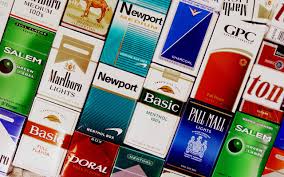
Yesterday's New York Times  carried a story about CVS stores deciding to not carry tobacco products in a significant number of their stores and, in fact, charging a surcharge to customers who opted to stop in CVS stores which do continue to carry tobacco.  This is because CVS is evolving from a drug store to a provider of health care (via it's nurse practioners, Doc-in-a-Box) stop in clinics for sore throats, blood pressure monitoring etc. CVS is now a big player in mail order pharmaceuticals, through which insurance plans reduce costs by contracting with a big player who can negotiate with pharmaceutical companies. 

So this company, which had humble beginnings in Lowell, Mass and then acquired a group of drug stores in suburban Washington, DC, has continued to merge and grow and gobble up health related corporations and is now a conglomerate of health related companies. No doubt it will soon be offering health insurance. 

The interesting thing is how it's corporate strategy, as a health care provider drove it to do something which could actually lose it money in the short run--refuse to sell tobacco products. But even that was a financial calculation. In the 1960's or even 1980's around 40% of Americans smoked; now it's down to 18%, so throwing aside a dwindling market in hopes of looking good to a bigger demographic makes dollar sense. 

In "West Wing" something similar in a political calculus was portrayed: Josh, the President's assistant, lets loose a torrent of invective against some balky Congressmen who are refusing to vote out of committee  funds for a lawsuit against tobacco companies. He gives a very Aaron Sorkin speech about all the kids who will start smoking and all the people who will die from smoking, trying to shame the Congressmen, some of whom are Democrats, into funding the Justice Department's suit.  Some of them object, on principle:  How can you sue the tobacco companies for trying to deceive the public about the dangers of smoking when you'd have to be deaf, dumb and blind not to know about the dangers and every package carries a warning from the Surgeon General? 

It is curious watching this, knowing how that actually played out: The tobacco companies wound up having to fund lots of programs, had to pay for some of the healthcare problems attributed to smoking, so, in the end, the companies had to accept a share of the responsibility for making a product which injures people.  Not that the companies were alone in the blame, but they were part of it and they had to pay a share. So Josh was wrong but he was also right, as judged by the outcomes.

Later, Josh realizes that politically, he made a mistake by getting the Congressmen to vote out the money--it wound up giving them cover for their upcoming elections. Some of the Republicans proved to be vulnerable because their constituencies had changed to an anti smoking sentiment and their resistance to suing the tobacco companies might have cost them the election as "nicotine pushers."  In the end, Josh had saved Republicans in key swing states by making them do the "right" thing.

Which reminded me of that visit Fred Rice made to the Hampton Democrats where he defended lowering the tax on cigarettes in New Hampshire. "We'll make less per package, but people from Massachusetts will come across the border for cheaper cigarettes, so we'll wind up making a lot more. Fewer cents per package, but a lot more packages. Lower profit margin but way higher volume."

"So, what you are proposing," someone asked him. "Is to export lung cancer to Massachusetts?"

"Well," Fred Rice said with palms held upward. "Cigarettes are legal."

That made sense to Fred. If they are legal then profiting from taxing a legal product is nothing to be ashamed of.

"The thing is," his interlocutor persisted, "We tax some things to drive behavior, to reduce their use, to motivate people to avoid expensive, destructive habits."

"They are legal," Fred repeated. 

And that is all that matters, where money is concerned, as far as Fred Rice could see.

Of course profiting from something legal may not be enough of a cover in politics.
The question is: is that still all that matters in commerce?


Sunday, July 12, 2015

New Hampshire Summer


Looking out my study window, I see my neighbor and her daughter kneeling in their vegetable garden: leafy things, lettuce, spinach seem to be doing well, but the tomatoes are not yet there. 
This morning, my baseball game ran from 9 til noon and I drank three quarts of Gatorade. It was hot enough I did not need to pee after three quarts, which meant, over the course of the game, I was three quarts down.
After the game, I took my bicycle down along Route 1 A, which hugs the sea coast. I had ridden this road hundreds of times, but had never taken the "Beach Access" streets in Rye until today.  This provided something of a shock. 
It was low tide at 3 PM and the side streets crossing 1A were jammed with cars and the owners and passengers of all those cars were on the sandy expanse on the other side of the cottages which line the road and block the view of the ocean and beaches.  From Hampton through North Hampton through Rye, beaches were packed, but you could never tell it from the road. New Hampshire is unusual this way.  You would never know how much humanity is flocking to that surf, traveling the coastal road. 

There are berms and sea walls and even a walled off Beach Club, and coves, lots of coves, where bathers pick their way down the rocky banks to a strip of sand. 

Some hardy souls, mostly New Hampshire natives I am sure, actually swim in the water, which is now warm enough to not turn white skin blue in under two minutes. 

It stays light until almost 9 o'clock now and the sun is up  by 5 AM. 

I'm pretty sure winter is over.