Friday, June 2, 2017

How Important is the Paris Accord, Anyway?

Barack Obama's mild shift away from coal powered plants and toward higher mileage cars would have satisfied our obligations.
--Bill McKibben

When my first child was born, 35 years ago, I walked out into the light of day, after a marathon of my wife's labor ending in delivery,  and I found myself, inexplicably, worrying about climate change. What sort of planet will my kid grow up in?


It was ridiculous, of course.   But it simply signaled a change in my perspective now that I had a kid. In those days, I worried about paying the bills at the end of the month; my worries were short term. 
But with this new life in my hands, I started thinking 20 years ahead, not that worrying did him or me much good. I couldn't do much to change the despoliation of the planet.
But something had happened to my psyche, walking around the delivery room, holding this kid, who was staring, unblinking into my eyes, like some space alien who had been delivered into my care and he was depending on me to do the right thing.

Trying to read and listen and go on line about the Paris climate accord, I'm left with more questions than answers. It's voluntary. It permits China to continue building coal fired plants and India to burn wood in five hundred million stoves.
The fact is, far as I can tell, China is actually one country which has felt the direct force of their own environmental malfeasance--they wear those face masks in the big cities because the air pollution is something they can see and feel whenever they walk outside. I'd bet the Chinese, even as they build those coal fired plants are motivated to clean up their own backyard.
India is probably more like I was when I had my first kid--feeling too poor to really do anything to save the planet, but still interested.


It seems more like an agreement in principle: We the undersigned agree to worry more about the climate and to try to do stuff to avoid damaging the planet.

But, as far as I can tell, or imagine, having dignitaries sign a paper in Paris means very little.
Correct me if I'm wrong. I'd love to be wrong.
What might change things, I suspect, is if someone can make money doing stuff which benefits the environment, like building solar panels, windmills and electric cars.
The tables and graphs I've seen in the WSJ and on Bloomberg suggest there are far more workers building solar panels in this country than working in coal mines, and far more "clean energy" industries gearing up than coal mines.

So I really don't get all the fuss about Donald Trump grandstanding about how he's pulling the USA out of a "deal" which is "bad for America."  Far as I can tell the deal was irrelevant the day it was signed and still is, but it makes for good theater. "If the liberals want it, I'll show them what a tough guy I am."
But look for the real effects of America not being in the Paris accord and you find only a lot of sputtering about losing our "leadership position" in fighting climate change--as if we actually had one--or phrases about moral leadership, embracing science, not rejecting science.  But will we build any fewer windmills or install fewer solar panels because of Mr. Trump's action?
Not that I can tell.
And if Bill McKibben is correct, the Paris accord was so toothless that had we simply done what we were already planning to do about coal fired power plants and automobile gas mileage, then we'd be in compliance and we still will be after Mr. Trump's speech.
Mr. Trump said he was acting to save the citizens of Pittsburgh and he didn't care if that hurt Parisians.  Fact is, nothing Mr. Trump can do will do either. He's just a puffy pink man who can growl all he wants, but Americans will keep building solar panels and buying more gas efficient cars and trucks.
Well, actually, not so much buying cars which guzzle less. Americans have shifted from low gas consuming cars to big gas consuming trucks and the very people who inveigh against the environment killing Trump drive gas guzzling SUV's.

Seems to me the best response from the liberals would be to shrug and say, "Paris never really meant much, practically speaking. If Trump wants to give people the finger just to look like a bad boy, let him do it. Nobody really wants to eat dinner with him  anyway."


Thursday, June 1, 2017

Democrats' Identity Crisis: Thomas Edsall and Jacob Hacker

Whenever I read an article in the New England Journal of Medicine which does not comport with the reality I see in my office, I dismiss it, no matter how tight the science seems, and most often, within the year another article appears which refutes that article.


However, when what I see in the trenches agrees with what the academics say they have found, I believe it.


Such is the case with Thomas Edsall's article in the NY Times today which elucidates the problem the Democrats had with Trump last November.  It wasn't so much that Trump beat the Democrats--the Democrats beat themselves.


Having gone door to door for months in the run up to November 8, I saw the problem in the faces of the people who answered the doors--especially in the parts of town where the ragged people live.  The underprivileged, the people at the bottom of the economic ladder had no use for Hillary.  Fox News and Rush Limbaugh and Donald Trump carved her up with allusions to her speeches to Wall Street at $250,000 a pop.
And she never answered that attack. And that attack killed her candidacy.


She was in the pocket of the rich.  Donald was not in the pocket of the rich because he was too rich to be in anyone's pocket, or so the story went.


Edsall cites studies which say things like: For the first time in its history the majority of Democrats voting for President--54%--had college educations. How anyone could actually know this--it's said to be based on exit polls--I do not know.
If you believe exit polls then you would think Hillary won Michigan and Pennsylvania.


Exit polls--phooey! I voted in the last election and the only thing anyone could tell is that I was a Democrat and I voted in Hampton, NH. Nobody could know whether or not I went to college, how much money I make or even who I voted for.  Exit pollers showed up for about an hour of the 18 hours the polls in my town were open. Tell me how sampling methodology with exit polling could possibly have been believable.


But Edsall's overall argument is persuasive--it's what I saw. Democrats lost the underclass. The party of the underclass lost to the country club Republican party because the underclass lost faith in the Democratic Party.  I could see that going door to door.
Not your Rust Belt Democrats


There was definitely a two headed monster that voted Trump in: There were the country club Republicans who cared only about one thing-- protecting their money and there was the underclass.
We ask how the underclass can be so stupid as to vote against their own self interest but the same question can be asked about liberal Democrats who vote for Bernie Sanders or for any Democrat. Democrats will try to shift wealth from the rich to the poor and the fact is, most of the upper 20% are now Democrats.

Edsall notes how the upper 20% will rebel when they see Democrats proposing to give the privileged place they have bought for their children to the children of the underclass. The 529 College plan which sent 70% of the tax benefits to families making over $200,000 was targeted by President Obama to bend it in favor of lower income families. The charge against this change was led by Democrat Chris Van Hollen who represented the 8th District in rich Montgomery County, Maryland, which includes Bethesda and part of Chevy Chase, a safe Democratic seat but woe to anyone who tries to take a place at Princeton from the family of one of those voters and give it to a kid from Anacostia, the poor part of Washington, D.C.

And rich Democrats rebelled, as they did when lower cost housing was proposed for Marin County in California. 


So the Democrats have a schism they have not yet addressed. You've got a party of rich people who cheer for the poor but they are not always willing to share their toys and joys with those poor.


And the poor know it.

Tuesday, May 30, 2017

President Trump: Shut down those German Car Plants!

"See the millions of cars they sell in the US. Terrible. We will stop this."
--President Trump tweet


VehicleU.S. April 2017 YTD SalesU.S. April 2017 YTD Production
 Mercedes-Benz C-Class – Vance, Alabama27,09828,455
 Volkswagen Passat – Chattanooga, Tennessee24,41525,578
 Mercedes-Benz GLE-Class – Vance, Alabama17,37459,322
 BMW X3 – Spartanburg, South Carolina16,77350,997
 BMW X5  – Spartanburg, South Carolina15,47256,290
 Mercedes-Benz GLS-Class – Vance, Alabama10,00618,876
 BMW X6 – Spartanburg, South Carolina2,08913,151
 BMW X4 – Spartanburg, South Carolina1,17916,979
 Volkswagen Atlas – Chattanooga, Tennessee —11,871
 Total114,406281,519

Source: Manufacturers, Automotive News Data Center


And so President Trump looks at those very bad Germans who employ Americans in car plants in South Carolina, Tennessee and Alabama. Those are very bad states. Very bad. We have to kill those jobs.


The Germans are bad, very bad.
The Russians are not so bad. Russians good.
Mexicans bad.
Wall good.
Chinese bad. (Except when we need them for stomping on the North Koreans.)
ISIS is very bad.
Saudi Arabia is good. Today. They buy our guns and warplanes.
Iran is bad.
Israel is good.


ISIS is bad. Did I say that?
England is good. Brexit was good.
NATO is bad. They owe us money.
President Trump doesn't like people or nations who don't pay what they owe.
Climate is bad, when it costs money. Climate is bad for business. We are going to stop climate.
Climate change is a Chinese plot.


.
President Trump is "authentic." He says what he means. You know where he stands.


President Trump has the best words. HIs words are good. People who don't like him are bad.


Tennessee is bad.
Alabama is bad.
South Carolina is bad.
They make German cars.
Wait. What?


Can I get one of those Mercedes before they shut down that plant in Alabama?


Sunday, May 28, 2017

Legalizing Prostitution and Drugs In New Hampshire

At the Exeter Democratic meeting focused on the Free State Project (FSP), one Democrat rose to say that the FSP members of the New Hamsphire House of Representatives (NHHR) wanted to "legalize prostitution and drugs," as an example of one of the outrageous ideas promulgated by the FSP.

I turned to my companion and said, "What a great idea!"
She promptly moved two seats away from me.

Later, we discussed these ideas.

PROSTITUTION:
I pointed out it's already legal in Las Vegas and the Netherlands and neither the city nor that country has gone up in flames.
I speculated treating it as a public health problem rather than a criminal problem would have more benefits than harm.


Hoping to monetize their sexual attractiveness in Amsterdam

My companion corrected me:  prostitution is not legal in Las Vegas, but it is legal in rural counties in Nevada.  Professor Google confirmed she is correct. Of course, illegal prostitution in Las Vegas is well known and apparently is much bigger business than the legal prostitution,  which is confined mostly to brothels just up the road.

Objections to legalized prostitution have fallen into several categories:

1/ Such work is demeaning to the women involved.
In the Nevada brothels women are brought out to  parade almost naked before potential customers, who then may accept or reject them, which is humiliating. 
I cannot see why this is any more humiliating than the Miss America contest or any other beauty contest with the swim suit meat parade, which is advertised as the ultimate in All American girlhood.
It strikes me that women walking naked in front of men does not, in itself, constitute humiliation. Beyond beauty contests, there is the scene at Hampton Beach, where nearly naked women walk in front of men daily. Those women do no look as if they feel humiliated, and in fact some look proud, others frankly provocative. I suspect the demeaning aspect of prostitution is a projection by some women upon other women. I have not had a lot of conversation with prostitutes, but the few I have had some of these women struck me as feeling not humiliated, but empowered. They felt they had a measure of control over their customers.


Hoping to profit from their naked beauty
And when it comes to humiliation, prostitution has nothing on capitalism for the ability to humiliate, as women (and men) are put into positions of having to do jobs which put them in positions which make them feel demeaned and undervalued.

I have to regard prostitution as a failure of the capitalist system, as if offers women a choice when other choices are not as attractive; what does that say for the choices? Some women can make $10,000 a night.
There is that famous poem by Thomas Hardy, "The Ruined Maid"

O 'Melia, my dear, this does everything crown!
Who could have supposed I should meet you in Town?
And whence such fair garments, such prosperi-ty?" —
"O didn't you know I'd been ruined?" said she.

— "You left us in tatters, without shoes or socks,
Tired of digging potatoes, and spudding up docks;
And now you've gay bracelets and bright feathers three!" —
"Yes: that's how we dress when we're ruined," said she.

— "At home in the barton you said thee' and thou,'
And thik oon,' and theäs oon,' and t'other'; but now
Your talking quite fits 'ee for high compa-ny!" —
"Some polish is gained with one's ruin," said she.

— "Your hands were like paws then, your face blue and bleak
But now I'm bewitched by your delicate cheek,
And your little gloves fit as on any la-dy!" —
"We never do work when we're ruined," said she.


2/ Under aged girls can be trafficked through the brothels. There have been instances, but there have been prosecutions for that. And there are laws  on the books for unwilling prostitution, kidnapping, enslavement. If women are engaging in prostitution willingly, and are of sufficient "age of consent"  where is the harm?

3/ The weekly inspections for HIV, hepatitis B and other diseases is confined to the women, not the customers, so protects the public but not the workers.
I'm not sure how to address this concern, as, presumably checking the customers would be expected to impair profits, but this must be a problem with at lease some partial solution.


DRUGS:

 Which drugs are we talking about and in what way will they be legalized?
Starting with marijuana, which many  authorities believe is likely less harmful than alcohol, there is a bill in the NHHR sponsored by Renny Cushing to make possession of small quantities of MJ legal. 
Renny has remarked he hoped to shift the approach from regarding drug use as a criminal act to thinking of drug use as a public health problem.
I'm with Renny on this.
But making possession and use legal while making sale and distribution illegal poses a problem: If the man who possess a small quantity is committing no crime, then why is he committing a crime when he walks to his car where he has 300 pounds of MJ in his trunk? 
Buying the stuff is not a crime. Carrying it is not a crime. Using it is not a crime. Then why is selling it a crime? 
Either the drug is legal or not, I would think.  
You would not prosecute a man for eating a cupcake in public but why would you send to jail the man who imports the flour from which that cupcake is made?


The problem for me with "legalizing drugs" is there is always a drug which is so deadly or harmful, you have to proscribe it: PCP (angel's dust), Fentanyl and methamphetamine spring to mind.  
You can use heroin daily and still practice piano or saxophone 10 hours a day and play in a club until 3 AM.  You can remain functional and survive.
But if your heroin is mixed with Fentanyl, you stand a good chance of dying after your first dose. 
So legalizing drugs may really mean, legalizing more drugs or some drugs but not all drugs.
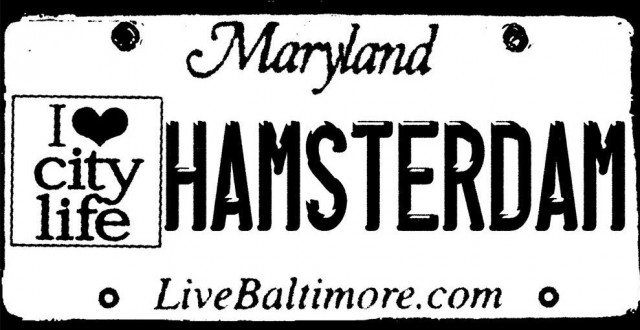
Hamsterdam, "The Wire"

As for heroin and cocaine, you have to ask what is the risk/benefit of legalizing those? 
What are the BENEFTS  you are hoping to achieve from your law?
1/  If it's to cut down on the associated diseases from contaminated needles, HIV, hepatitis and subacute bacterial endocarditis, well the experience in Portugal mayb be instructive. The Portuguese have reported a decline of 90% in these outcomes after heroin was legalized there from the simple expedient of clean needles and uncontaminated product.
2/  But would legalization lead to a decline in use? Unlikely. It is hard to know what use has been  before legalization, so how could we know if there has been a change after legalization?
3/  Would legalization lead to a decline in deaths from overdoses, once heroin of known purity and concentration is sold through pharmacies? Possible but not likely.

4/  What about reduction of crime as heroin addicts would now have an inexpensive source for their drug? This is very possible, but we have no really good studies.

As for the risks? 
1/  Would legalizing heroin or any drug mean more people would try it or become addicted?  No persuasive data exists. But you have to ask: Has legalized alcohol resulted in more alcoholism?  Are more people alcoholics since the repeal of Prohibition? 
I don't know. But not having data does not prevent me from guessing and I'd guess not. 
People abuse alcohol whether it is legal or illegal, whether or not  it is easy to get. They do it because of their own demons. I suspect the same is true of heroin and cocaine.
Major Colvin expounding on the genius of accomodation

You will raise the issue of people who became addicted to legally prescribed opioids. This is a case of increasing addiction with increasing use of legal drugs. 

But I'm not sure I really believe people who become addicted to opioids got addicted because of an innocent exposure and would never have got addicted had it not been for that exposure, as if they were infected by a tainted needle.  I'm not sure. I'm just not convinced. It is possible people who have become addicted to oxycontin or other opioids would have become addicted to an opioid without the source having been the prescription. 
Many people addicted to prescription opioids have chronic pain and trying to separate out the drug from the accompanying disease must be a very difficult task.

2/ How would you know if a driver was impaired by marijuana? 
There is no technology for that yet. We can do a breathalyzer test for alcohol but there is no such thing for marijuana yet.

Legalizing heroin in the real world, in America,  would not be pretty. 
The depiction of what this would look like was well imagined in "The Wire."
When the police told the drug dealers they could sell their drugs unmolested in certain zones of the city, as they do in Amsterdam, the touts and hoppers heard them as saying "Hamsterdam." Hamsterdam was a zone where drugs were sold and used openly, without interference from police.
In Hamsterdam, unlike in Portugal or Amsterdam, drug sales were privatized, unregulated and simply cordoned off. Drug dealers were allowed to sell in the open without a competing governmental agency which might sell safer, cheaper drugs. 
In Portugal and the Netherlands they apparently did not worry so much about impinging on the free market in drug sales. Drug addiction in these places is addressed as part of a public health system effort, and in that sense a control was imposed on drug use which was not possible when drugs were bought, sold and used underground.


In general, I tend to err on the side of not making things criminal which may be best regarded as public health problems.
The effort to outlaw is often an effort to bury a problem, to hide it behind walls so the good citizens do not have to see it. 
It's understandable citizens do not want to gaze upon disease and desperation. Just think of how you feel walking down a street and seeing a panhandler reaching up asking for alms. 
We will likely never be free of the death and damage drug addiction, as a disease, causes in America.
I do think we can manage this disease better.
What we are doing now is the 21st century equivalent of throwing insane people in insane asylums and chaining them to the walls. 
We could do better, if we decided to approach the problem dispassionately. 

Saturday, May 27, 2017

The Free Stater In Me

The more I think about my run in with the Free Staters last Wednesday, the more I ask myself how much I believe with which they might also resonate.

I have for years believed myself to be a most unelectable man because I question certain sacred beliefs:

1/ Marriage licenses:  I am offended by the notion of a government sanctifying what should be the most personal and intimate relation two individuals have.  Why do we need the government to issue a license? Well, if there are rights which people need, like visitation rights in a hospital, if there are financial rights connected to arrangements with mortgages and joint ownership or child support, marriage streamlines all this, but you could handle all this with contracts and you do not need licenses.
The Free Staters I met also resented licenses, but they extended that resentment to licenses for barbers and fingernail cutters. There I would draw the line. Licensing is a pretty inadequate way to protect the public health, and it has often been ludicrous and structured to protect a guild more than to protect the public, but I do not want a fingernail cutter spreading MRSA or a barber spreading hepatitis and a license might be at least a wave in the direction of certifying the practitioner has a passing familiarity with risks to public health his practices might present.

2/ Legalization of prostitution: I am told Free Staters are for this.   I think we ought to do this in some way. I realize there might be problems with sex trafficking and pimps and involuntary prostitution, but I cannot see that keeping prostitution illegal has, in a real world sense, ever addressed these problems. Better to treat this as a public health problem and make sure sex workers are tested for HIV and sexually transmitted diseases.

3/ Legalization of drugs: Again, I'm told Free Staters want to legalize drugs. I'm not really sure what that means. I'm convinced our current "war on drugs" is stupid and ineffective. I think it might work better to legalize not just marijuana but heroin and cocaine, which could be treated as a public health problem, sold inexpensively in package stores or pharmacies along with clean needles to prevent the spread of hepatitis and HIV.  But there will always be drugs which are too lethal to be legalized: PCP, methamphetamine, Fentanyl, among many others. There will always be an illicit drug for sale. 

But what are our goals in making drugs illegal? To prevent members of the public, particularly stupid kids from using them? There is no evidence making drugs illegal reduces their use. The prevent deaths from overdoses? Again, no convincing evidence laws or drug rehabilitation programs work to prevent this.  I think we have to admit the truth, namely that we will never save the majority of dope fiends from their addictions or the consequences of these addictions. We can treat this problem as a disease to be dealt with but we cannot cure it.

4/ Foreign wars: The Free Staters I spoke with said it would be better if the United States was broken up into smaller states like New Hampshire because then we would not be big enough to wage wars around the world which have been, overall, destructive and done more harm than good.  I have often thought about this:  Since World War II what wars have the United States fought which were "the good war?" Certainly not Vietnam, or even Korea. The Gulf Wars? Were they really a good idea? Afghanistan?  Well, that helped us hunt down Osma Bin Laden, but did we really need to stay in Afghanistan for 10 years for that?  Our "Global War on Terrorism," really is no more a war than the "war on drugs" or the "war on cancer." 
We did some good in Kosovo and maybe we should have tried to do more in Rwanda, but look what happened when we tried to play policeman in Somalia.  
On the other hand, when you are facing a threat which has grown into a massive threat, like the Soviet Union or Nazi Germany, or in the future, possibly China or even Korea or Iran, the very size of the United States is essential. 
Were we to follow the libertarian point of view, we would have very possibly found ourselves conquered by Hitlers hordes and living in a world of High Castle dimensions.  
Having a big federal government spelled the end of the evil of slavery, so big government is not always a bad thing.
The FSP folks often argue against the most basic obligations of an individual toward a larger group. They value individual freedom to the point where it threatens group freedom or the greatest good for the greatest number: Thus, they argue people should not be forced to vaccinate their kids against polio or measles. 

Refusing to get your vaccinations is not simply a matter of your being allowed to take a risk for yourself: You put the whole society at risk if you get polio or measles or Ebola. You are a potential walking contagion. Yes, there may be risks to vaccines, but that's a risk you owe your fellow countrymen.

And then there is that question of your obligation toward your fellow man. The Free Staters say they would have stayed home during the Civil War. That makes sense in terms of their belief in insisting government not press individuals to do things those individuals don't want to do, like give up their slaves. So they would have sat home. 

I like to think I would have put on the blue and gone to fight to free the slaves. I place a higher value on that sort of freedom. You can sit home with your family, by your hearth and tell your wife and kids, "It's not my problem. I want to be left alone."  But I could not live with myself, having done that. 
The essential mindset of the Free Stater is anti-social; it is tribal at best.

I am no student of history, so I may be missing something here, but is there another nation in the planet's history which fought a civil war to free of an underclass as we did in our nation's biggest war? 

I don't believe in "American exceptionalism" except in this one respect. I think we are the only nation in the world which really did fight to make a people truly free, to emancipate a whole slave population. 

And, somehow, even though it wasn't me doing that fighting, it makes me proud to live in the nation that did that. 


Shifting Sands: Government in the Service of the One Percent

David Owen, writing in this week's New Yorker, offers, almost inadvertently, a perfect example of how government serves the very rich, out of sight, significantly and on a scale which dwarfs food stamps.

This is an article about geology, "The End of Sand/ Annals of Geology" actually, and there is much in it to fascinate the least political among us.  
Who knew so much was known about the microscopic properties of sand, the shapes of grains and what this means for asphalt roads, beach volley ball, concrete skyscrapers?  Just on an intellectual basis alone, it is worth reading. Makes you appreciate how much mankind knows, how he can use minutia to build vast metropolises or to preserve them.

But from the political angle, there is enough here to outrage people from either end of the political spectrum, everyone from Howard Zinn to the New Hampshire Free Staters, who  would, I expect,  howl to hear how our government has dedicated itself and billions of dollars in an open ended effort to preserve the million dollar summer homes along the East Coast, in particular New Jersey.  
After Hurricane Sandy, Congress appropriated billions in the Disaster Relief Appropriations Act of 2013.  What this funded was a massive Army Corps of Engineers project which was contracted out to a company called Great Lakes Dredge & Dock.  This company, a perfectly legitimate enterprise, started around Brigantine, New Jersey and worked its way up Long Beach Island, a twenty mile long island no more than three blocks wide, shifting sand from the ocean bottom to at twenty foot sand dune designed to protect the million dollar summer homes lining this island.  (Some of the beneficiaries complained because the dune blocked their ocean views.) 
As Owen notes, these barrier islands over the millennia formed and reformed, the ocean side washing toward the continent and then back out, but with houses on the islands, this cannot be permitted. 
The federal government has made coastal second, third, fourth and fifth homes possible by the simple expedient of funding flood insurance, but this new effort is something else again.

At the same time President Trump aims to cut food stamps, Medicaid and every program he can find to force the undeserving desperate and poor from the government teat, Congress has sent billions upon billions to mow the lawn, shore up and protect of the nation's richest citizens. 
And, of course, the owners of these homes feel absolutely entitled to this government largess. It's disaster relief, after all.
The disaster, of course, is not just Hurricane Sandy, but the best Congress money can buy bowing and scraping back in Washington. 
The argument can be made this coastal development pumps billions into the economy, as the building trades and the services and businesses connected to seaside homes and vacationers profit.

But whatever happened to the "free market?" If people want to enjoy coastal homes, why should citizens in the interior or who are simply too poor to afford ocean front homes pay for this extravagance?  If the free market actually operated in America, the homeowners would pay for these dredging operations.
Living on the East Coast, I can certainly appreciate the aesthetic joys of living on the ocean, and one can say the more people who spend time near the ocean, the more people will have a vested interest in protecting the oceans. 
But this effort should be front and center whenever anyone complains about the federal government spending money on the undeserving poor. 
Why are the rich so much more deserving? 
One might ask the same question about the ultrarich mega industrial farm corporations which get billions in federal dollars for farm subsidies. 
I'd bet, if I were better at Google, I could churn up more programs of government welfare for the rich, except, of course, when those dollars go to the rich, it's not welfare.
 It's investment. 
Or disaster relief.


Friday, May 26, 2017

Let Them Eat Coal


Whenever I can, I read the comments section responding to Paul Krugman's wonderful Op-Ed pieces in the NYT and this time he pointed out how the voters of West Virginia had voted by 40 points for Trump over Hillary and how a huge proportion of West Virginians are on food stamps, disability, Medicaid through Obamacare or Medicare, more than almost any other state and yet they hate the guvment and resent the Democrats who brought them all this relief. Almost 1/3 of West Virginians are on Medicaid and 1/5 on food stamps.
The Federal Government is carrying that state and they resent the federal government so much they voted for Trump to destroy it. Drown it in a bathtub.


West Virginians have the same mind set as Kentucky voters who refused Obamacare until it was renamed "Kynect" and then they loved it.


West Virginia is a small, impoverished, poorly educated state of 1.8 million people about the size of New Hampshire but without the education level of the Granite State.


As one of the letters in response to Krugman's piece said, "Let them eat coal."


It's hard to have much sympathy for people who seem too obstinate and stupid to help themselves.


But as others observed, people at the bottom of the social ladder need to have some group below them to feel superior to and West Virginia is 93% white so there is not even a significant Black population to hate and blame for their misery--they have to blame the folks Fox News points them toward.


The fact is there are large swaths of each of those "blue wall" states from Wisconsin through Pennsylvania which are basically Alabama between the big cities.

If ever the Democrats get back into office, the question will arise--should we try to do anything to help these determinedly miserable people or should we simply ignore them and move on?