Monday, November 1, 2021

Hometown Heroes: How Dudley Dudley, Nancy Sandberg and Phyllis Bennett Saved the Great Bay

 When a neighbor handed me a small book, "Small Town, Big Oil" written by a University of New Hampshire faculty member (David Moore)  the only reason I opened it was the photo of Dudley Dudley, about whom I'd heard various things over the years but I never really knew exactly why she was locally famous--something to do with Aristotle Onassis, which sounded to me like some myth: What would Aristotle Onassis want with New Hampshire? Could Onassis even find New Hampshire on a map?

Dudley Dudley: Don't Tread on Me


It turned out to be one of those books which actually kept me up all night--and I had work the next day--but I literally, could not stop turning pages.

Onassis 


Turns out, Aristotle Onassis did know where New Hampshire was and as part of a scheme to gain control over oil transport, he seized on the idea of creating his own mega refinery, which he decided to place in Durham New Hampshire, the largest oil refinery of all time, in the entire world, five times as big as anything in New Jersey.

Onassis's shipping wealth was closely embroiled in shipping oil and the oil producers more or less had him by the tender parts and this effort was part of his idea to go into the oil refining business himself and shuck the shackles of the oil barons.

To do this, he decided he'd ship oil in massive amounts to the Isles of Shoals, pump it from that depot under the water in a 15 mile pipeline to Rye and from there another 20 miles to Durham Point, hard by the Great Bay. 

From this, emerged a saga which makes  "Silkwood" and "Erin Brockavich" look like nursery rhymes, as the Onassis plan needed all sorts of co-conspirators from the governor of New Hampshire, a Georgia transplant named Meldrin Thomson, to the creepy,  venomous William Loeb III, publisher of the Manchester Union Leader. 

Moore structures his book masterfully, introducing each of the key players and then mixing them together as we see the struggle unfold.

Dudley Dudley--her first name was Dudley and she married a guy name Dudley (and you'll never convince me that wasn't half the attraction)--had just been elected to her first term in the New Hampshire House of Representatives, where Loeb thought no woman belonged. He never referred to her as anything other than Mrs. Dudley, because, after all, that's what she was, nothing more than a housewife trying to play in the big leagues of state government.  But Dudley proved to have a few important qualities: She was clearly tenacious and not easy to intimidate and she was shrewd enough to realize if she tried to oppose an oil refinery by appealing to environmental concerns Loeb would quickly label her a tree hugger and blow her away.  So she chose to frame the argument as an issue of local control: Durham should not be forced to accept an oil refinery against the wishes of the local residents. But to demonstrate the locals were actually opposed to this guaranteed environmental rape, Dudley would require help from the locals and some mechanism to get the word out. That's where Ms. Sandberg and Ms. Bennett came in.

Of course, the governor immediately cried out this was NIMBY and no local town should have the right to deny to the state this cornucopia of largesse, which, with the country in the middle of an oil crisis, with gas prices through the roof and long lines at the gas pumps, seemed irresistible. Onassis and his gang of expensive suits promised Durham residents would no longer have to pay property taxes owing to the revenues from the oil refinery and there would be thousands of good jobs at the refinery. Newmarket residents seemed all for it and wanted the refinery there. Gas station owners shut down their pumps, telling residents to vote for the refinery if they wanted gas for their cars.

Phyllis Bennett


Of course, none of this ever really happens when oil refineries come to town, and Phyllis Bennett, who had moved up from Baltimore to start a humble, weekly local paper, Publick Occurences, wrote extensively about how this sales pitch was clearly bogus and a con job. Turns out even if you have an oilrefinery next door, your own local gas station does not get cheap and plentiful gas for you and the taxes the oil refinery pays do not reduce your town's property taxes and there are very few jobs for locals at the refinery. 

Bennett's story is in some ways the most dramatic and built for Hollywood of the three women: She had moved to New Hampshire to pursue her dream of publishing a newspaper which really mattered and her husband was her partner in this, but not long after they started her husband started an affair with a young, pretty staff intern so as her own battle with William Loeb and the governor erupted, Phyllis was faced with the dissolution of her marriage. Just to really complicate things, the intern was the only one on staff who knew how to work the machine which actually allowed them to print the paper, so Phyllis had to keep her on staff just to get her stuff in print. (This was before computers emerged a decade later.)


And then there was Nancy Sandberg, who described herself as a housewife, tending her garden, when mysterious men in expensive suits showed up trying to buy property from her which they said was for a house on the Bay, when, in fact, this was part of a plot to buy up contiguous plats of land for the oil refinery. Nancy started a local activist group: Save Our Shores, which would play a pivotal role in getting the town of Durham to vote to reject the Onassis bid.

William Loeb III


All this happened back around 1974 and as unlikely as most David vs Goliath stories are, this one actually happened and the three women managed to defeat Onassis.
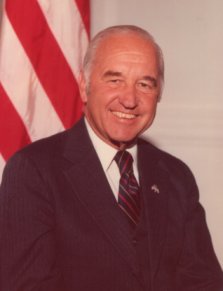
Meldrin Thomson


Onassis died the next year, and had he not, the battle may have been waged for longer and the locals ground down by big money and the battle won by the bad guys.

Dudley Dudley went on to fight the Seabrook Nuclear Plant but she lost that one. 

She did, however, along with Nancy Sandberg and Phyllis Bennett manage to save the Great Bay from the inevitable oil despoliation which would have accompanied the refinery and more likely the underwater oil pipelines. 

The cast of characters is hard to resist: William Loeb whose editorials cast Dudley Dudley as an elitist dilettante, likely Communist intent on denying an economic bonanza to the state just to satisfy her liberal inclinations to stick it to the common man. Mildren Thomson who never met a billionaire he didn't want to serve and exploit for his own benefit. The list goes on. 

But the most surprising characters are not the villains. They are the ordinary extraordinary women who found themselves at the tip of the spear and decided to thrust and parry right back and to not take a step backward.


The Straw Man Argument in the Abortion debate: Ignoratio elenchi

 Recently, on Twitter, a woman I follow, who is intelligent and liberal posted a Tweet using the argument that a woman's right to abortion is all about her being able to control her own body and what happens to it.

While I believe in abortion rights, this argument has always struck me as specious. The woman who argues abortion is only about a woman being about to control what happens to her own body is clearly ignoring what right to lifers are  are saying, which is there are two bodies involved in this case, not just the woman's body. What the right to lifer said is what is being done to another body, the one inside the woman, who at some point, most people would agree is close enough to being a human being to have some rights. The "I control what happens to my own body" ignores that argument as if it doesn't even exist.

6 weeks


The Original tweet from Irishrygirl was: "Good morning. If you only support abortions in instances of rape or incest, you're reinforcing the idea that in order for a woman to have control over her own body, someone else had to violate it first."

To which Obadiah Youngblood replied: "At 38 weeks gestation, it's not simply a question of control over your own body--there's another body in question. On the other hand, a pulsatile clump of cells does not constitute a "heart." It's about line drawing and the moment of conception is not the place to do it."

To which Irishrygirl replied: "If someone is 38 weeks pregnant, that person wants that child. Crib is built, clothes bought, names picked out."

To which Obadiah responded: "You are being literal, intentionally missing the point. What about 28 weeks? The point is, at some point, the fetus/conceptus passes beyond a point where it's only about the mother. I'm for abortion rights. The question is where does abortion end and infanticide begin?"


8 weeks

But Obadiah was voted down.  Scores of Twitter readers liked Irishygirl's reply about the crib. Nobody liked, and some vilified, Obadiah.

For Obadiah, this whole thread illustrated a tactic in argument which exasperates him: Ignoratio elenchi, or in a slightly different meaning, "The Straw Man" setting up an argument you can win which has nothing to do with the original argument, which you would lose.

22 weeks


It is the inability to follow the more abstract point of the argument of abortion, which comes down to where in gestation what is part of the mother's body gains a new conceptual status, that of an independent human being, or, in ancient conception, that thing growing inside a woman's body becomes "ensouled."

As always, the best illustration of this sequence of call and response comes from "The Wire" where Stringer Bell tries to make a point to his staff about being satisfied with something which is not a success and calling it a success because it's easier. Bell is spinning out an abstraction, telling an allegory to make a point, but it's entirely lost on at least one of his minions.

Below, is the link to Stringer:


https://www.youtube.com/watch?v=Rp1ExC52BOc

That's what Obadiah was facing.


Saturday, October 30, 2021

How Koftkino in Elite Colleges and Institutions Led to Varsity Blues


When I was in training at The New York Hospital-Cornell Medical Center, the gleaming palatial hospital on the chic upper East Side of Manhattan, I was well aware that there had been 30 applicants for every internship spot in this program. Most of the interns selected had graduated from Ivy League medical schools and we were constantly told how fortunate we were to be trained by famous, exalted faculty like Fred Plum, chairman of Neurology and author of the standard textbook on coma, and Charles Christian, chief of Rheumatology, and Maria New, the endocrinologist who described the biochemical basis for an important adrenal disorder and Thomas Killip who invented the cardiac care unit and who did important work in congestive heart failure.. Before them, a parade of faculty had written their textbooks at Cornell, Edward Hook in Infectious disease, author of a famous textbook, Graham Jeffries,who wrote the basic textbook in gastroenterology and then these luminaries were plucked off by other institutions where they became the chairman of departments of medicine.

The stellar faculty, presumably, attracted stellar interns and residents (housestaff), maybe some of them even dreamed of being launched into stellar careers by these faculty mavens.

So, to be at THE New York Hospital was an honor, a status conveyed by that elusive thing called "prestige."  If you were wearing the white uniform bearing the blue New York Hospital logos, you were among the elite. It was like playing for  the New York Yankees.

But when I found myself in the emergency room, admitting some CEO of some Wall Street firm who had vomited stomach blood all over himself after a drinking binge, and was now busily  passing malodorous maroon stools, I began the note I had to write in the medical chart with the standard, "It is an honor and a privilege to be allowed to participate in the care of this patient..." 

Not infrequently that scene from David Lean's movie "Dr. Zhivago" floated up in my mind where Zhivago visits the apartment of a woman who is the lover of a very important Moscow businessman and heavy hitter who has swallowed poison in a suicide attempt and Zhivago's professor of medicine has been called to see this woman, summoned from a party at Zhivago's house. As they drop the tube to drain the poison from her stomach, the professor looks across the bed at Zhivago and says, "This is the practice of medicine. Nothing too heroic or inspiring. Medical practice in the real world: It stinks."


Had I been doing the same thing four miles down First Avenue at Bellvue Hospital for the indigent, I would have likely become depressed and I would have wondered why I had worked so hard in college to get into a good medical school, if the actual practice of medicine was so banal, repulsive and discouraging. Street people wandered the halls of Bellvue and some even lived in the tunnels underneath the hospital.  But doing the same thing with my highly select colleagues at the Great White Tower, this was heroic; this was, in some sense, an honor and a privilege. 

Now, with the perspective of age, I can see what was going on in my head was what the Germans call "koftkino" which roughly translates into "head cinema."

The movie running in my brain was I was part of some elite group, a strike force. This was before any TV shows like "ER" or "Scrubs" or anything beyond soap opera depictions of doctors. MASH had just come out, the first movie to suggest doctors could be randy or irreverent. 

But I don't think medical school is unique. I suspect college and the whole elite college thing is more of the same, and the "Varsity Blues" scandal of parents buying places in "elite" colleges for their offspring through the expedient of paying coaches to "recruit" their kids for teams. And to the parents, it must have all seemed just playing the system: After all, it's perfectly legal and ethical for David Koch to contribute $10 million to Harvard just before his daughter applies. So what's so different, if you don't have $10 million but you do have $40K to buy a place for your kid?


What I really liked was the remarks made by one of the daughters whose father had bought her a place at USC or UCLA or somewhere saying she really didn't think she would go to class or do assignments; she was more looking forward to going to football games in big stadiums and to fraternity parties. So that was the cinema in her head.

And I have to say, looking back, for me and for most of my classmates, I cannot see that college was transformative beyond giving me a chance to simply re invent myself and become a grind and a nerd which is what was required for getting into medical school.

But it was not a case of meeting the sons and daughters of important people who then opened up opportunities for me to enter the upper class, leaping up from my ordinary and middle class origins. 


Don't get me wrong: I'm grateful for that 4 years of focusing on myself and my own interests and development, and it was salutatory  to have professors who actually knew their own fields thoroughly, unlike my high school teachers who were only a chapter or a page ahead of their students in the textbook.

But do these colleges make any real difference in the trajectory of the lives of the vast majority of students who attend them?

Doubtful.


Friday, October 15, 2021

How They Hear Us: Those Shadowy Swing Voters


 Donald Trump won a slew of counties Barack Obama won before him.


The New Hampshire House of Representatives, the New Hampshire Senate, the Executive Council all changed from Blue to Red in the 2020 election which sent a Democrat back to the US Senate for a state with a gay US Congressman, a woman Congresswoman and another female US Senator.


Somehow, there are folks out there who seem to not be reading the textbook, not just in New Hampshire, but across the nation.

I would submit that people out there, voters, are not simply swallowing the advertising thrown at them, but somehow digesting and metabolizing it.


Last night, at a meeting of the Hampton Democrats Communication Committee, the leader of an effort to send the Democratic message out to "social media" presented the results of her efforts and they were impressive: People, apparently, are seeing our advertisements; some are actually pausing to watch them, and some may even agree with them.

This very professional Democrat has brought a level of sophistication to the Hampton Democrats which was sorely needed. 


Before she arrived, Democrats had pounded on the doors of their neighbors. This method, "canvassing" is very labor intensive but also very operator dependent. I sallied out with a variety of local DEMS, but only one was ever any good at it. This classy lady knocked confidently on the door and when the homeowner appeared, within seconds she had established some sort of kinship,  kids who were in the same class at Winnacunnet High, or someone's sister's cousin who use to go skiing together.  Having established that we were not simply annoying people trying to sell stuff but rather almost kin, she dazzled them with a beatific smile and glittering blue eyes that riveted every male and melted the heart of every mother, and we were home free.

But she was the exception, the canvasser who was so expert she could make a heavy lift look easy. 

The advantage of the ad sent to Facebook is that the person delivering the message did not need to be exceptional; she simply needs to hit a button. It was the impersonal versus the personal. It was the difference between the bombardier in the B29 over Cologne and the infantry soldier slogging through the mud on the ground below: The Facebook ads reign down and we hope it hits its target audience, but we know many bombs, if not most, will fall without effect; the canvasser, like the rifleman, hits her target, but she has to hump miles across hill and dale to get into position to deliver that hit.


At the committee  dissent  arose because someone suggested the message might be delivered, but how it is received is unknown, or once absorbed how long it may last before some MAGA message displaces it. 

And what is our message, anyway?

What SHOULD it be?

This is not the role of the committee. The committee formulated a plan, raised money to execute it and did so with spectacular efficiency, complete with spreadsheets.


The committee delivered a message, but who conceived the message?

Well, that message is the Democratic Platform, made real and alive through Facebook ads.

The gospel, the "party line" downloadable from the NH Democratic Party website, says:

 "We believe it is the role of government to provide an adequate safety net to protect individuals in times of economic distress."

I know how folks--folks who sit in my office every day-- hear this: "They want to tax me and pay my neighbor to sit on his duff while I work. That's socialism!"


"We believe in a government that promotes business development statewide by ensuring the availability of a well educated, well trained and well compensated workforce with competitive wages and benefits and the skills needed to compete in a globalized economy."


And people I know hear this as "They want to move me out of my trailer park and burn it down and replace it with McMansions for college boys with computers who cannot do their own HVAC, electrician stuff or plumbing."


"We believe all students should be able to attend college or career training without the burden of excessive debt...by responsibly funding our public community colleges and universities...critical to this mission."

Translation for the swing people: "Career training doesn't include electrician, plumber or HVAC guy. This is all about replacing guys like me with college educated trust fund babies who want a free ride."


"We believe in gender equality and cultural sensitivity for individuals who are transgender, non binary, or from racially underserved communities and that this sensitivity  should inform health care delivery and access."

Translation for the erstwhile Obama voter now Trump voter: "I've never met a transgender person, but I've heard I have to refer to someone with a vagina as "he" or "they" and I'm too old to learn how to speak gender equality speak where 'They went to town to get their nails done,' refers to a person who was born with a penis but now wants to use the girls' locker room. And that creeps me out! 

NB: This last translation is not an endorsement of this way of thinking, simply a recognition that most folks do not know much about "gender dysphoria" or sexual differentiation and they are bewildered and repulsed by the minimal images they've seen on Tucker Carlson and FOX News. And Jim Jordan and Tucker Carlson are beating the brains out of Democrats with this transgender fear and loathing.  "Freakshow!" is the operating phrase on Twitter and on Fox.

I'm not saying Democrats should fail to defend transgenders or any other persecuted group, or that they should abandon the idea that all people have equal rights and deserve respect, but we have to see what the opposition will do with this.


"We support our law enforcement, fire fighters and EMS personnel who keep our citizens safe."

Translation in Coos County: "Sure! You wanted to DEFUND POLICE! But now you realize when the active shooter arrives, you need their help. You care more about Black Lives Matter than protecting the guy in the garage, the gas station, the 7/11 who gets held up at gunpoint."


"We support all people regardless of race, religious beliefs, disability, immigration status, national origin, age, sex, sexual orientation, gender identity or expression (LGBTQ+).

Translation: 

"Wait! What?  First of all, I have no idea what LGBTQ+ even means. I mean, I get lesbian, gay (what's the difference?), bisexual and transgender (sort of.) But What is this Q? Queer? How's that different from Gay? And what's with the +? I don't even understand what language you're speaking.  And does that mean you are going to use my tax dollars to pay for In Vitro Fertilization (at $10,000 a shot) so the lesbian partner to a trans woman (that is a guy with a penis on estrogen) can get pregnant. And what kind of sex do these two have, anyway? I mean, it's like you're speaking in code and I'm not voting for you! 

And why should I have to learn to translate this sentence? 'Pat went to the market to buy themselves a razor because their estrogen therapy got denied by the insurance company again and they are now growing a beard.' 

I mean, what's that all about?" 

Why should I have to learn new pronouns for fear of violating the sensitivity of a small minority, however beleaguered that minority may be?

Now, you may say this knuckle-dragger is irredeemable and he'll never vote Blue anyway, but this guy voted for Obama TWICE!


As Ezra Klein noted in his NYT piece, you have to realize, if you are a Democrat, that folks you'd like to vote for you are not woke, are not even going to agree with you on some pretty important issues, like treating everyone with respect, even if they look strange to you. 

But you can find some areas of common belief, AS OBAMA DID.

"We worship an awesome God in the Blue states."


Saturday, September 11, 2021

Intelligence, Genes & Piffle


The Sept 13 issue of the New Yorker carries an article about Kathryn Paige Harden, who has had a star quality academic career until she became embroiled in the tar pit of genes and intelligence.

It was mentioned early on, Dr. Harden had been admitted to college with a full scholarship because she had a perfect score on her SAT exams. It is remarkable how those who extol the meaningfulness of IQ exams or any exams almost always have scored high on those exams.

I am still trying to ascertain exactly what questions are asked on these exams.

Wouldn't it be important to know what the questions are to be able to judge how meaningful the exams may be? But it is almost as if if the makers of these tests reveal the questions, then the tests will lose their usefulness.

The original IQ tests originated in tests developed by some Harvard professors for use in assessing recruits during World War One. They were looking for good officers amidst the crowds of men surging in. The exams had questions like who discovered the principle of volume displacement, Archimedes or Galileo?  Now, if you'd gone to Exeter prep school or Harvard or Princeton, you might have run across this sort of information, but if you were just off the farm, or worked on automobiles, maybe not. So the Army got an officer corps of aristocrats. 

Intelligence, in the 1920's when immigration restrictions were passed into law mostly was defined by how much like White Protestant males the immigrants were.

Dr. Harden


For some groups, particularly on campuses, the idea that "intelligence" is predetermined by "genes" is an anathema because it means trying to improve the performance and outcomes for many individuals, and more worrisome, for many groups, may be impossible, no matter how much government or institutional money is spent.

The famous case is Carrie Buck (Buck v Bell) in which the Supreme Court ruled Ms. Buck should be subjected to surgery to sterilize her because she was deemed to be of low intelligence and Oliver Wendell Holmes, the Supreme Court justice famously remarked, "One generation of idiots is enough."

And then there is the book by Charles Murray, "The Bell Curve" in which intelligence was said to be fixed in nature, presumably genetic, and thus fixed at lower levels in certain racial groups and higher in others.  Arthur Jensen also chimed in with work which suggested genes among some races simply limited their intelligence. 


So, against that sorry history, when Dr. Harden started studying twins in hopes of assessing the roles of genes in intelligence, she found herself lumped in with those demonized predecessors. 

On one level, it is almost self evident that genes must play a role in intelligence: Consider the known genetic anomalies, Down's Syndrome being the most common and widely known, where genetic, or at least chromosomal abnormalities virtually always result in cognitive impairment. 

On the other hand, exactly which genes are affected in Down's which result in lower intelligence are unknown.

For that matter, what is a gene?

Anyone who has read Siddhartha Mukherjee's wonderful book, "The Gene" will know that genes are regions of chromosomes which seem to have some geographic/anatomical features and so are discrete in that sense, but they work by producing proteins and there are so many interactions among genes and among things which are not quite genes which affect their function, it is not exactly like simply pulling and plugging in hardware in a computer.

And what, exactly, is the "intelligence" Dr. Harden is measuring?

What exactly are the tests? What are the questions on those tests?

When you test a 3 year old and she tests out as a "genius" does she continue to test at genius levels for the rest of her life?

What about the kid who tests below normal at age 3? Is he destined to never test high?

And how does problem solving or spatial relationships play in with memory?

My younger son turns out to have a prodigious memory. When he was six, in first grade, he listened at the reading  group circle and recited the text for each picture as if he were reading, and it was only a sharp teacher who realized when you presented him with the same text in a different book he had no idea. She straightened him out quickly and he became a good reader, but he had used his memory to simply slide around the hard work of learning how sounds matched letters.  Same thing happened later when he was trying to learn algebra--he simply memorized problems but he could not abstract, until he was caught.  So he used his memory to outflank learning problems.  Today, he's a vascular surgeon and he reads thousand page fantasy novels relentlessly. Would you say he is not intelligent? Well, if you'd known him when he was 5 or 11, you might have.

He now has a daughter, age 3, who is clearly very bright. She learns song lyrics instantly and when a toy she was misusing was taken away from her and she demanded it back she was asked if she would stop misusing it, she paused and said, "I'm not sure I can guarantee that." So she's  bright. But will she continue to be bright or will she peak and others will surpass her? And what will her mathematical abilities be?

My senior  year in college, I took a genetics course. There was a lab part to it which involved cross fertilizing fruit flies and waiting for their offspring to hatch and counting how many flies had red eyes, how many white. It was drone work, required persistence, patience, tenacity. I was already accepted to  medical school. I had no interest. At a dinner before graduation, the professor of the genetics course pulled me aside to say he was dazzled by my final exam, which was mostly essays. I was surprised. 

"I haven't read an exam that good in I don't know how long," he said. 

I got a "B" in the course, despite my "A" final exam. I got a "B" because I had a low grade in the lab part of the course. You may say that grade was based not on my genetics "intelligence" but on my overall effort.  Intelligence is about something innate, not effort, is it not?  But I did not score high because there were problems which just did not interest me (the number of white eyes in fruit flies.) The judgment of my "ability" was based, in some part on the effort I was willing to expend. 

Similarly, I have no intelligence in crossword puzzles. Whenever Will Shorts come on NPR with his little quizzes: "What word beginning in T and ending in R is spelled the same forwards and backwards if you add two to each letter in its place in the alphabet?" Who cares?

Do IQ tests have problems which simply fail to interest the kids tested?

And then there is the New Yorker caption test. Every week three suggested captions appear below the previous week's cartoon. The suggestions come in from all over the country, from Montana to New York City. And each and every one of them is light years better than anything I had been able to imagine having struggled the week before looking at the cartoon. 

I submit that if you made cartoon captions a part of the SAT exams you would wind up with an entirely different sort of freshman class at Harvard, Yale and Princeton. 

Yesterday, I watched as my neighbor, Matt, and his son, a junior in engineering at the University of New Hampshire, worked on replacing the spark plugs in his car. They laid out the different nuts and bolts from different sections of the car on different colored plates, to keep track of each. They photographed each layer of the engine before they removed it and after, so they could reassemble it. They worked methodically and encountered different problems going in. A wrench kept turning in the wrong direction until they realized the switch on the wrench was catching on the backside of a wire which reset the direction. 

Matt was telling me about his  wife's friends who constitute "an eclectic" group. Matt's son did not know that word. Matt had used it correctly, but could not quite gather the words to define it as "a mixture of different types, a group of diversity."

Both Matt and his son are clearly highly intelligent but would the intelligence which guided them down to those spark plugs and allowed them to navigate their way back up again have shown up on Dr. Harden's intelligence tests?


Wednesday, September 8, 2021

Plea Bargaining Away January 6th


So Buffalo Man, aka QAnon Shaman, has met reality in the form of a jail and now he realizes there are grown up consequences to his role playing game which involved invading the People's House on January 6. 

We see this sort of thing all the time in hospitals, and I'm told it's true on battlefields, where the big, tough guys with all the swagger are suddenly faced with the reality of actual pain or life threatening circumstance and suddenly are weeping and crying for their mothers.

All that is easy to understand.


What is difficult to understand is why the prosecutors play along.

If I understand the idea of a plea bargain is to free up the court, i.e. the judges, and the prosecutors from all the effort, trouble, expense of a trial.

But in this case, is a trial, a public proceeding with witnesses and testimony and judges and juries not exactly what is required here? 

What are these prosecutors being paid for, if not to protect society?


As the  trial of the killer of George Floyd demonstrated, there is something therapeutic about the right kind of trial for the right kind of criminal. 

"Show trials" have got a bad name: The idea is the verdict is preordained. But the show is the point. Public opprobrium is the idea.

You may say, "But what if the jury lets him off?"

Well, that is a chance you take. But with the right venue, the likelihood this guy will walk is low.

The Nuremberg Trials were about this. 

Did they plea bargain with Herman Goering or any other Nazi at the trials of those men who brought mayhem and atrocities to Europe?

I want to see Buffalo Man on TV while witnesses testify to what they saw him do.


Lot of work, sure, but nothing compared to the work policeman and soldiers put in every day. Those white collared prosecutors can earn their pay and bring these miscreants to trial the way they are supposed to do.


Monday, September 6, 2021

Texas Anti Abortion Law: The South Secedes from the Union, Once Again


So, Texas has outlawed abortion and Mississippi will soon follow, as will, likely the entire Confederacy. 

Great cries have gone up from pro choice folks saying that a minority of White males have thrust this outcome down the throats of American women and the Right has triumphed through trickery,  through Mitch McConnell's corrupt bargain with the Evangelicals to buttress the Right flank with reliable anti abortion Supreme Court justices while they rammed through this unpopular legislation through state legislatures.


Mad Dog does not see it that way.

Defining abortion as any termination after a "heartbeat" is audible is the right of the people's representatives. Electing a President who promised to create a Supreme Court which would agree that termination of pregnancy after 6 weeks is is an expression of popular will. 

It is, in a word, democracy.

Drawing a line between what we call "infanticide" and abortion has always been a matter of popular will, much as some would say it's a matter of theology to be dictated by priests or a matter of law, to be dictated by courts.

The fact is, drawing that line is exactly what Justice Blackmun did in his famous 1973 decision, which most people have never bothered to read.

Mad Dog had read it, though. Mad Dog was astonished to see Justice Blackmun progress from a history of attitudes toward abortion toward a scheme for drawing the line at fetal viability--i.e., the point at which the fetus/baby can exist outside the womb, just as Mad Dog had done in 1969, when he wrote his senior thesis in college.

At Mad Dog's college, you had to write a senior thesis before you graduated, and Mad Dog, having majored in an interdepartmental major was allowed to write his thesis outside of a single department, e.g. Biology. So he chose an ethics professor from the Department of Religious Studies as his thesis adviser and chose "The ethics of abortion."

This professor was an ordained Episcopalian priest and Mad Dog met with him at least once a week to discuss his thinking about what constitutes abortion and what constitutes infanticide.

Mad Dog began with the proposition that until the baby is delivered and draws his first breath, it's abortion to interfere.  The Catholic Church, in its early days had said as much.

"Then, you have no problem with holding a scalpel in the birth canal, as the baby is hurtling down to be delivered, to see the light of day, and meeting that onrushing skull with a lethal blade?" the professor asked, blandly.

"Well, no, " Mad Dog, age 21, had replied. "That seems more like murder."

"Ah," the professor said, smiling faintly. "Then you have a problem."

Ultimately, Mad Dog looked through what others had said and what others said was the distinction between abortion and infanticide is all about line drawing and the line had been drawn all over the place by different people and different groups at different times.

Mad Dog liked the idea of drawing it at "viability" but as his professor noted, viability is a slippery margin: As medical science progressed, and as pediatric intensive care units improved, younger and younger babies could be delivered and rescued and survived. So in 1969 a baby born at 26 weeks had a chance, barely, but by 2020  who knew where that line would be? Right now, 22 weeks is likely not a viable time for most but a few can rarely survive.

Likely, today, it's closer to 24 weeks.

Blackmun drew the line around the end of the 2nd trimester, 27 weeks.

That was 1973.  

Had Mad Dog gone to law school after graduating college in 1969, he might have called Justice Blackmun up to congratulate him on joining him in a "great minds think alike" moment. But Mad Dog had not gone to law school. He had gone to medical school and 2 years before the Roe opinion abortion had become for Mad Dog not an intellectual exercise, but a very different sort of reality. By the time Blackmun wrote a recapitulation of Mad Dog's Roe opinion, Mad Dog had seen abortion in the real world. 

In 1971 Mad Dog was doing his first clinical rotation as a medical student on Obstetrics and he witnessed the "salting out" of a 22 week old fetus. This "fetus" or "kid" or "baby"  came out the vaginal canal after a catheter had been placed through the cervix into the womb and hypertonic saline (thus the name "salting out") had been infused until the uterus started contracting and the baby expelled. The obstetrician quickly captured this creature, this semi life form, and handed off to the circulating nurse who scampered out of the delivery room into an equipment room where she placed it on a stainless steel tray.  The nurse wasn't quite quick enough to elude the eye of the woman would would have been its mother, and glimpsing what the nurse held, she called out, "Oh, baby, I'm so sorry!"  

22 week fetus


Mad Dog looked at the conceptus, the best name he could think to call it. It was not breathing. It never drew a breath that Mad Dog could see. But it looked fully formed, like a tiny version of a baby about the size of a hand. It wasn't really alive, but it wasn't just formless tissue. "It's dying and it's barely been born," that Dylan line strikes a cord, although, it wasn't really dying if it's never actually ben alive. 

And Mad Dog thought to himself, "This feels wrong."

Mad Dog had seen a gynecologist scrape out the "products of conception" of an 8 week pregnancy and the doctor wiped his curette off on a cloth gauze pad and examined it after every few scrapes saying, "Yup, that's it." And Mad Dog could not see anything on that pad that looked remotely like a human being or like any defined structure. It looked like a few shreds of hamburger meat, not like anything living.

But that 22 week old conceptus resembled a human being. 

Mad Dog asked himself at the time, had he just witnessed a murder? Certainly the nurse and the woman from whom that entity had been removed seemed remorseful. But what was that thing? 

It was potential life, but not fully realized life. It did not breathe or move or look around with open eyes. But if there had been a law which said that any pregnancy that reached 22 weeks or even 20 weeks was protected, Mad Dog could have been persuaded.

So where are we now?

In Texas, it's 6 weeks.

Fetus 6 weeks


Even at 8 weeks, the conceptus looks more Martian than human.

But, right-to-life would argue, what does it matter what it looks like?


Fetus 8 weeks 


On the other hand, the same folks who say it doesn't matter what it looks like want to show mothers ultrasound images of their 6 week old fetuses, which, like clouds in the sky, look more like babies than the actual article does. The ultrasound is image + imagination, just like clouds.


8 weeks ultrasound


Looking like a dinosaur does not make a cloud a dinosaur.

Not a dinosaur


It's that old, "This is not a pipe" thing. The treachery of images.


If it has a "heart beat" the Texans argue, it's alive. The problem is: How do you define "heart beat"? There really is no true heart, as defined by the presence of fully mature heart cells until after 20 weeks. If it "beats" does that make it a heart? This heart beat argument is really just the audible version of "this is not a pipe."


Likely, the entire South and parts of the Mountain West will outlaw procedures to end pregnancy very early on--some states will say as soon as sperm meets egg. 

Women will then leave those states and seek their abortions in "free states" in the north or on the West Coast.

The question of whether there will be some 21st century version of the Fugitive Slave Act will ensue. What if a Texas woman terminates her pregnancy in New Mexico or California? What if a woman from Mississippi flies to New York City to terminate her pregnancy?

Will these women be arrested upon return to Texas or Mississippi?

If they chose not to return can someone in Texas sue that woman in Texas and demand she be extradited to face Texas justice in her home state?

Pro choice folks argue that this is all about a woman's reproductive rights.

They argue that a woman has a right to control what happens to her own body.

But the right-to-lifers argue that is true-- until there is another person's body at stake and just because that body happens to reside inside a woman does not give that woman the sole right to decide whether it lives or dies.

The captain and owner  of a steamship may have the right to sink his own ship. It's his property. But if there are people in the below decks hold, he cannot be allowed to use that ship as he sees fit, if he wants to sink it.

Texas has taken the whole debate to the extreme: It deputizes every person living in Texas as informants and gives them legal standing--informers can be rewarded with $10,000 if they get wind of a woman who has sought out and accomplished an abortion and these informers can sue a man who gives that woman a ride to a clinic in New Mexico.  Texas has become a Statsi state and turned into East Germany, or Hitler's Germany, more like, with citizens giving up Anne Frank to the local Gestapo.

But that's the South. From Texas across Louisiana, Mississippi, Alabama and Florida, we expect as much. Missouri, Arkansas, South Carolina are locks to follow suit. There may be some debate in Tennessee, Kentucky and West Virginia, but they'll likely go that way.

North Carolina and Virginia might demur.

Oklahoma, Kansas, Utah are locks for outlawing abortion.

But this is, in the final analysis, the will of the people, of people speaking through their state legislatures to get what they want. 

We may not agree. We may not like it up here in New Hampshire, but that's their choice.

What we have to decide is whether or how much their preference for Donald Trump, Alex Jones, Jim Jordan, Mitch McConnell and Tucker Carlson matters to us.