Friday, March 4, 2022

Charismatic Leaders

When Amy Klobuchar visited New Hampshire, during the Democratic primary season,  I asked her how she planned to run against a candidate of charisma with a campaign based on policy. She clearly had not been asked that question before and she smiled, thought for a moment and said, "Well, I think I have charisma, too."


She may have had some charisma, but clearly, nothing like Donald Trump. She did not become the candidate on the Democratic ticket.  Elizabeth Warren was a crowd pleaser, but she has a wispy voice  and she's a wisp of a woman, just not physically imposing. Bernie Sanders has plenty of charisma, and I thought he would stand up on stage best against Trump, but his policies scared Democrats. His policies were so extreme, he scared too many people.

Beyond Sanders, the Democrats have trouble finding leaders who can speak above a whisper. 


When 11 candidates presented themselves for consideration for the Congressional seat in the 1st district of New Hampshire, the candidate of charisma, Terrence O'Rourke, got 900 votes. He scared women. He seemed too angry for Democratic women. Chris Pappas, who barely speaks above a whisper, got 21,000. Pappas comes from the state's most populous city and his family owns a big restaurant and he has lots of friends in town, but he is a house cat. A woman who looks like she could win a spot on FOX News, Maura Sullivan, got 19,000 votes, even though she had no base of friends in New Hampshire, had only moved to the state recently, but she had tons of dark money running TV ads constantly. She had a modicum of charisma, but no policies. 

Great Charisma, Horrific Cause


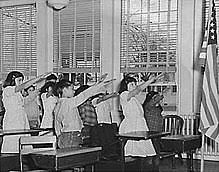
When it comes to charisma, nobody beats Hitler. Crowds of women wept has they saluted him rolling by in his open Mercedes, standing up arm outstretched, brow in a stern frown. A man of strength.


The man had appeal, Heaven knows why.

George Washington had charisma. He was over six feet tall at a time most men were five feet eight. 


Had someone put a bullet in Hitler's brain somewhere around the beer hall Putsch, in 1929, would the Holocaust or World War II ever happened?

We'll never know. But I'm betting, none of those co conspirators could ever have pulled off the Third Reich without him: Himmler, Hess, Goring, Goebbels. Just to banal or too ugly. 

Now, we have Putin, that little man, who Nina Khrushchev says is a 5 foot five inch man who is trying to sell the idea he is five feet six.

He marches down long red carpets, against a back ground of golden drapes and walls, with those peculiar guards, who look not just like wooden soldiers from the time of Catherine the Great, but like wind up toy soldiers of the Nutcracker ballet. There's something weird they do with their necks and chins and heads, which is a little creepy.


What is that all about?


I'm guessing it's about projecting of not just power but past glory.

But it's all in the mind of a single man. A little man trying to be big. A little man who wants Russia to be a goliath again.

And he is a man who orders other men poisoned.  Firing squads are not his favored expedient. He likes poison. Poison is a little more worrisome. You just never know when it might get to you. 


Fiona Hill noted Putin never touched a bite or sipped a drink at the state dinner she attended, sitting next to him. Fear of poisoning?

Another favorite Russian tactic is throwing people out of windows.  Don't ask me why. I suppose it's one of those things about plausible deniability. Russians like to lie to your face with a wink, saying they know you know they are lying, but they enjoy lying while you know they are lying.

So, Mr. Putin's current project in Ukraine is a "humanitarian intervention."

Obadiah Youngblood


Senator Lindsey Graham has expostulated that someone needs to kill Putin. Put a bullet in his brain. For once, Graham has spit out the truth. But Putin, like most dictators, has taken great care to protect himself, to hunker in the bunker. 

Putin, it has been written, obsesses over the demise of Omar Ghaddafi. Apparently, he was sodomized before he was shot. That, if what we are told is true, disturbs Putin greatly. 

John F. Kennedy remarked, "Any man who is willing to trade his life for mine can kill me."


As it turned out, his killer or killers did not actually have to do that.

The men who killed Martin Luther King and Bobby Kennedy did not hang for their deeds.

In a day of drones and remote killing machines, one would think a leader, even Putin, could be reached.

But, apparently not. 

And so we have Ukraine.


But we also have, unexpectedly, Zelensky, that guy nobody had ever heard of in the West--like Trump, a TV creation, but in the case of Ukraine, a good creation, who actually had brass balls when the time came. 

And he had great timing and delivery.  When Putin claimed Zelensky had fled the country or was cowering in hiding, Zelensky said, "I am here. I'm not going anywhere." And he smiled that faint, economical smile and he was, in an instant a man of more charisma than either Trump or Putin, because he was a real patriot. America offered to whisk him away to safety. "I don't need a ride," Zelensky said. "I need ammunition."

A patriot needs to take a risk, to put his fortune or his life at risk in the face of palpable threat, something neither Trump nor Putin have ever done nor ever would do. That, Trump would say, is for suckers.

There is no such thing as patriotism without risk or without cost or sacrifice. The Proud Boys and FOX News staff are all about phony patriotism: tough talk, posing with guns, slogans, flags. None of that easy, safe patriotism is anything more than posing. Zelensky is at the front. 


Zelensky says, "No." That is what heroes do. 

And therein lies the difference. 


Friday, February 11, 2022

Separation of Church and State


The very first words of the very first amendment in the Bill of Rights are, "Congress shall make no law respecting the establishment of religion."


Unlike the Constitution of the State of New Hampshire, which says, ""No money raised by taxation shall ever be granted or applied for the use of the schools of institutions of any religious sect or denomination, ” the interpretation of what constitutes the establishment of religion is not spelled out in the US Constitution.

The ultraconservatives now occupying the Supreme Court keep whittling away at what constitutes establishment of religion.

One big trend is to allow governments to provide to religious institutions and the schools which are an inseparable part of them, the same benefits as are provided to public school students or to students at non religious private schools: For example, if you say you will provide all students in Hampton, NH with bus transportation to school, you cannot say, "well, except for those kids who want to be transported to Catholic school." (Everson) If you want to offer playground equipment to all kids in town, you have to provide it to the playgrounds on the Lutheran church campus (Trinity Lutheran Church v Comer). So the argument that you cannot discriminate when handing out goodies because some school is religious has become law.


But a new decision (Espinoza v Montana Department of Revenue) expands the area in which the state has to pay religious schools, in which scholarships made available to private schools have to be made available to private religious schools, so now a state is required to fund religious education if it provides similar grants to non religious institutions.  Justice Roberts argues if you must provide playground equipment, then you must provide scholarships to learn religion, which just goes to show how Catholic education can infiltrate brain cells of almost anyone. 

When and if the Court is ever packed or rearranged or infiltrated with more liberal justices, this decision will be, hopefully, one of the first to go.

In Maine, there are students who live so far from any public school the only practical schools available to them are religious schools and the state government is now facing a Supreme Court which will probably direct Maine to pay to send these kids to religious schools. 


But in New Hampshire, there is a case which potentially could break the back of the establishment clause altogether when and if it ever makes it to the current SCOTUS. 

In the town of Hampton, every year, the town votes to set up an account of $65,000 in the town's department of education, for the use of the Catholic Sacred Heart School. This debit card has been used to pay vouchers presented to the town from the Church, and each year about $42,000 is used to pay for a school nurse (which New Hampshire law says every school can or must make available to every student at every school in town) but $23,000 is used for computers, testing materials, textbooks and possibly painting classroom walls--it isn't clear--but for operating expenses of the school, which is owned by the diocese of Manchester, NH. 


What is meant by the "establishment of religion"?

Well, if the town of Hampton declared in writing that the Catholic church was the official church of the town, choosing it over the Baptist, Congregational, Episcopalian, Methodist and Faith Community Church, most people would agree that's government (not Congress, but what applies to Congress applies to all levels of government) establishing a church.


But beyond statements, and naming rights, what else could be establishment? How about if a judge erects a huge cross in his court room or, say, places a big plaque with the 10 Commandments on his wall? Or a nativity scene at the front of the courtroom, right next to the witness stand? Or a picture of Pope Francis?

But for most state churches as they function in England or Europe the big thing is not symbols, but rather money. The Church of England gets money from the state to paint church walls, pay staff, buy computers.  So if we, here in America, the land of Jefferson, Madison and Franklin, start paying for the costs of operating churches, would that not constitute an establishment of church by the state, especially if only one church were so blessed?


With the current Thomas/Alito/Barrett/Kavanaugh/Roberts Court, it's not clear they would see anything wrong with selecting one church out. They might say, well if the citizens in a town all vote for that church to be funded by taxpayers' money, would we want to interfere with the free exercise of religion by those voters who are good Catholics and choose to direct their taxes to the Church?

This is predictable. 

But it does not mean it's right.


Fact is, we have for over 200 years been free of the state being beholden to any church and we have forgotten why that might be a problem.

At a recent deliberative session in town, considering defunding the church, one lady pointed out that same church school closed down a book fair because one of the books put on sale told the story of a same sex couple raising a child. 


Oh, my.

The fact is, Hampton schools have failed to teach history to its folk, and they have forgot all the mischief religious wars and intrigue of popes and religious institutions have caused. 

For my part, I'd recommend the TV series, "The Tudors" be shown in class. It's got lots of sex and nudity and would hold the interest of the students, but it really does show the dangers, as heads get chopped off and people get burned at the stake and villagers are impoverished trying to meet the tithes demanded of them to support the churches. 

But I won't hold my breath.


Hampton is a small New England town and as Grace Metalious observed in Peyton Place religion is a volcano.

Dr. Matthew Swain, the hero, describes the Catholic and Congregationalist churches which bracketed the town like bookends as "a pair of goddamned volcanoes. Both of 'em breathin' brimstone and fire...There were three things he hated in the world, he'd said often and angrily: death, venereal disease and organized religion. In that order."

It is, of course, Dr. Swain who is put on trial at the end of the book for performing an abortion on a teen age girl raped by her step father, a set of extenuating circumstances which today's Catholic church would not find exculpatory.


We have here, in small town New England, folks who stand up at deliberative sessions and say we have funded the Catholic Church in town for 50 years and they see no reason to change that no matter what the Constitution in Washington says. And when asked if they would allow taxpayer dollars to fund any other church in town, they smile knowingly and say, "Well, if they can get enough votes for that, the way we have..."

And so we sail on, in this nation of laws.


Thursday, February 10, 2022

Things You Cannot Vote On


When I was growing up in Virginia, the local townsfolk voted to have segregated schools. The folks wanted White kids in one school and Negroes in another school. Been that way for 100 years. Then, the Supreme Court said, "No, you cannot vote on that because that local law violates the law of the land, the most basic law, which is the Constitution."


Monday night, in Hampton, New Hampshire, I heard the same sort of argument coming from a very agitated man who said he had grown up in Hampton, and for 50 years the town of Hampton had voted to write checks to the Sacred Heart (Catholic) School to support their operating expenses. But that night citizens rose to object to funding a religious school, a church with town taxpayer funds and he was dumbfounded and outraged.

There was an attempt at obfuscation: The supporters of the government funding of religion attempted to say that this money was being spent on the school nurse and that the state government says that every school child is entitled to a nurse and so we can't discriminate against the kids in the Catholic school. But the treasurer of the school board said 65% of the $65,000 was spent on the nurse--as if that made it alright--and she left unsaid that meant 35% or $22,750 was spent on textbooks, computers and testing materials, operating expenses of the Church school.

When a woman proposed that if any other school, a Muslin or Jewish school for instance requested the same $65,000 this be automatically awarded. The Catholic school folks objected to this on two grounds: 1. The school requesting the money might be a church of Satan and we would not want to give money to a church preaching stuff we don't approve of  2. The Catholic Church had done its "due diligence" which is to say, it had come to the town government, got itself a warrant article and got that warrant article voted through, so every other school, Jewish, Baptist or Episcopalian ought to have to "earn" it the way the Sacred Heart School had done. 

The New Hampshire state Constitution specifically forbids spending state funds on religious institutions,

The NH State Constitution says that "no money raised by taxation shall ever be granted or applied for the use of the schools of institutions of any religious sect or denomination.” 

 but that didn't matter to the folks at the meeting: They vote 22 to 11 to fund Sacred Heart and the same vote to not fund any other church school unless that school managed to get a warrant article passed and they approved of the $22,750 being spent on non nurse items, like computers, and for all I know, the painting of classrooms and other operating expenses.

Apparently, the mechanism is the school spends money and then sends invoices to the school board or some Hampton town official who then cuts a check to cover the costs.

So, in Hampton, every member of the school board voted to reject the 1st amendment of the US Constitution, "Congress shall make no law respecting the establishment of religion." 

Apparently, the school board has not been schooled in civics, in Hampton, New Hampshire.


Saturday, December 4, 2021

Ganging Up On The Women


Back in 1973, when men wanted something in New Hampshire, they got more than just a little bit testy when a woman stood in their way.


When Aristotle Onassis faced loss of control of his shipping business because Arabian oil giants controlled 40% of all world shipping and were moving in on his empire, he decided the best way to counter that was to go into the oil business himself and he hit on a plan to ship crude oil to the Isles of Shoals off the New Hampshire Coast, to convert those islands into a massive fuel dump, to pipe the crude underwater by pipelines to Rye and then up the coast to the Great Bay at Durham point, where he would build the world's most massive oil refinery, bigger by orders of magnitude than anything then in existence.

Sweeps her right off her feet, that cigarette


The governor of New Hampshire, Meldrin Thompson, heard this plan, and not being awfully bright and not inclined to ask too many questions, he said it was a terrific idea: There was an Arab oil embargo and gas lines were snarling America's mobility,  putting a crimp into the free wheeling American way of life  and someone (we can imagine who) said a refinery on the Great Bay would mean:

1. Huge bucks for New Hampshire, somehow; just exactly how was unclear since you could not tax oil refineries with local taxation.

2. An end to worries about where the next tank of gas or heating oil was coming from, which was not clear because gas for automobiles isn't what they pump out of oil refineries. 

3. Money, money, money, at least some of which would find it's way toward his office and perhaps to his own coffers.

Thompson was appalled that anyone, let alone a woman, would stand in the way of this gift from "one of the great men in the world."

The Georgia Peach


Thompson, of course, was just a puppet on the string hand of the editor of the Manchester Union Leader, William Loeb, who had put Thompson in office and who thought of himself as the real power behind the throne. 

Loeb was, by all accounts, an intensely strange human being, although, in his time, his special form of pathology was not thought particularly strange. But let us say, his interactions with women might well have been the inspiration for Hitchcock's famous movie, "Psycho." He lived with his mother a very long time and Mad Dog is not entirely sure if she was found strapped to a rocking chair at the end of his life. One thing we do know is his mother sued him to get back the money she lent him to start his paper and then he sued his mother's estate after she died. So their relationship was, shall we say, fraught. 

He married out of college but later, when he was in his 40's divorced to marry a 28 year old woman but that marriage ended in divorce and he married an heiress. The big question is, what were these women thinking? 

Maybe it was that pistol he carried under his arm in the shoulder holster--women cannot resist an armed man.

Mamma's Best Boy


When Dudley Dudley, a freshman member of the New Hampshire House of Representatives, rose to oppose the oil refinery in her town of Durham, at Durham Point, Loeb became apoplectic.  

Here is what Loeb had to say about "Mrs. Dudley" in his newspaper (capital letters are his, not mine.)

Women, 50 years ago


"We are dealing here with arrogant know-nothings, educated beyond the capacity of their intelligence."

[Loeb was acutely aware of his own educational deficiencies and carried a life long grudge against people he who thought considered him their intellectual inferior.]

"Of course, you understand that these people would not do any of this work themselves. They would be the FIRST to scream if their television sets did not work, their electric toothbrushes didn't run, or if they couldn't get warm simply by turning on the thermostat."


Representative Dudley Dudley


[Republicans have long strummed that chord: These overeducated Democrats think they're smart but they can't do what electricians, HVAC, plumbers or carpenters can. Mr. Loeb did real work, mind you, writing stuff for his newspaper. He had men for electrical wiring for his TV and toothbrush.]

"BUT BECAUSE THEY ARE SO STUPID AND SO ARROGANT, THEY DON'T DRAW THE CONNECTION BETWEEN THE OIL REFINERY AND THEIR OWN LIVES OF COMFORT. THEY THINK THEY CAN HAVE ALL THE GOODIES OF LIFE WITHOUT THE REFINERY OR ANY OF THE OTHER INDUSTRIAL WONDERS OF THE MODERN WORLD."

Of course, as Ms. Dudley pointed out, her constituents had all those wonders already without a refinery leaking 8,000 gallons of oil a year into the Great Bay.

"What these people fear," Loeb stormed, "Is in actuality a very tastefully designed (italics mine) refinery, which would not injure the atmosphere of the Town of Durham, but which would quietly send forth a live-giving [sic] stream of oil to take care of the needs of all the residents of New Hampshire, as well as a good section of New England, while providing immense tax returns in the town of Durham."

Scares the Hell out of Mr. Loeb


[Each of these claims proved demonstrably false, and were debunked one by one by Ms. Dudley and by Phyllis Bennett of the newspaper "Publick Occurrences" and by Nancy Sandberg, the local activist who started a community resistance organization "Save Our Shores."

Loeb concluded: "ALAS WE HAVE EDUCATED A CERTAIN TYPE OF JACKASS IN THIS COUNTRY TO BE SO ARTICULATE THAT HIS BRAYING OFTEN DROWNS OUT COMMON SENSE AND LOGIC!"

Loeb really did return, time and again, to the idea that university educated people are arrogant, think themselves better than the hardworking tradesmen who built New Hampshire and had no business in government making life difficult for the businessmen who profited from things like oil refineries.

When Aristotle Onassis offered to build an anti-pollution laboratory at the University of New Hampshire located near the refinery, Ms. Dudley noted, "Thanks for the pollution lab, Mr. Onassis, which--by the way--we wouldn't need if there was no refinery in the first place."

The governor and Mr. Loeb agreed to always refer to Dudley Dudley as "Mrs. Thomas Dudley, the housewife," and Loeb's editor a man named Finnegan, wrote in the Union Leader, "It's impossible to satisfy people who are determined to be unreasonable, or--in the case of Mrs. Thomas Dudley--are motivated primarily by a hunger for personal publicity," who, he assured readers was so craven for public attention, "We're sure the Durham housewife would have braved a hurricane to get her picture taken."

Other hostilities leaked out, "Consider the kind of illogic demonstrated earlier this year," Finnegan wrote, "by Mrs. Thomas Dudley, the Durham legislator who is currently the most voluble spokesman--whoops, spokesperson--against the oil refinery."

This is the tenor of the men arrayed against Dudley Dudley, Nancy Sandberg and Phyllis Bennett. 


Were they men at all? 

What sort of men would believe they could bully women simply by calling them names or refusing to refer to them as independent people with names and identities beyond that of being their husband's wives?

In today's world, we can clearly see the traits for what they reveal--men who cannot win by argument, so they resort to the ad hominin attack. They are the little men, who never saw a shot fired in anger at themselves, but who try to bathe in some imagined reflected glory of manhood, of male gender. I may not be smart enough to debate Mrs. Dudley, but I'm a man, which is all I need to be.


Saturday, November 20, 2021

On Respecting Pronouns


Let us agree: People ought not be denigrated because they are Black or White or homosexual or because they consider themselves "gender fluid." 


Recently, a boy who plays football at Exeter High School was suspended after a conversation he was having with another boy on a school bus was overheard and the girl who confronted him engaged him in a texting exhange with him, which she reported to the high school principal the next day. 

The boy did three things, if online reports are to be believed:

1/ He maintained that there are only two genders: male and female. He posited this as a statement of fact or at least of his belief.

2/ He, or his parents, or some other people, justified his statements as "Christian belief."

        This, of course, muddies the waters. We all would be better off if this never got injected into the argument. It would be cleaner if he simply said, "I'm not convinced there are more than two genders. That's my story and I'm sticking to it. You may disagree but you cannot make me believe differently. It's my right to disagree."

3/ He expressed frustration with the texts from his interlocuter by using an abbreviation for a profanity: STFU.

Some reports have claimed he was suspended for the profanity, but that would violate the most recent Supreme Court ruling on a similar case. 

Significantly, he told the girl to "leave me alone." Since when does a bully say that?

In any event, he was not texting a transgender so he cannot be accused of bullying. 

In fact, a case might be made the girl on the bus was bullying him. 


Report from FOX News:

A female classmate identified as A.G. overheard them and allegedly chimed in, "There are more than two genders!" A.G. is neither transgender nor nonbinary but believes in gender fluidity, the suit says.

A.G. later obtained M.G.'s phone number, and the pair had a contentious exchange, the papers allege. 

"Gender and sex mean the same thing," he wrote her. "There are only two genders and sexes."

She insisted that gender is different from the biological sex one is assigned at birth. "Your [sic] in high school you should know this," she shot back. 

"I also know that ur a bozo," he replied. "Just stfu and leave me alone," he wrote, according to the lawsuit. 

The next day, M.P. was pulled out of his science class by the vice principal and his football coach, William Ball. 

The pair confronted him with the text messages A.G. had turned over and chastised him for "not respecting pronouns."  

Here are some issues raised by this kerfuffle: 

1/ LEGAL/ADMINISTRATIVE:

    There are questions about 

         a/ Why the student was suspended from playing in a football game:

Reports thus far do not show the texts between the football player and the girl who accosted him on the bus, but we are told in some reports he was called into the principal's office with his football coach and told he had violated the rule against disrespecting other students by refusing to use the proper pronouns. 

         b/ Who actually suspended the play, his coach or the principal?

Apparently, the school now says the coach suspended the player for not being a proper "role model" owing to his refusal to use the proper pronoun. This administrative sleight of hand gets the principal off the hook and makes the coach the enforcer. But the same offense is still there, presumably, failure to pronoun properly. (The idea of football players being "role models" for kindly or noble or even civil behavior is a bit beyond the pale, one might think.)

And what gives the principal and faculty of Exeter High School the right to suspend a football player from playing in a game without a trial of that student before his peers or perhaps a panel of parents because he expresses doubts about forcing new rules for pronouns?

         c/ Whether suspending the player from playing in a game is different than suspending him from school

There are lots of cases of students being suspended for violating stated school rules: In Tinker, in 1969, a girl was suspended for wearing an armband to protest the Vietnam war and the Supreme Court said students do not leave their right to free speech at the school house door. Later, in the infamous "Bong Hits for Jesus" case, the Supreme Court reversed this. Later still the Court held for a girl who expressed her rejection of the school cheerleading squad in profane terms.


2/ CULTURAL:

        a/ What is the basis for a legal prohibition of a transgender male to female person who has not had "gender affirming surgery" i.e., still has scrotum and penis stripping naked in a "girls' locker room"?

There are laws against public nudity. A man or a woman walks down the street or into a store completely naked; he or she does not touch anyone, may not even speak to anyone, so how can their very presence cause harm? Well, we do accept this would make people uncomfortable, but what is the harm? If you accept laws on public nudity are appropriate, then why would laws against a male transexual undressing in a girls's locker room be unacceptable?  

        b/ What harm is done to a transgender person if others refuse to refer to that person as "her" or "him" or "they" and what harm is done to those who are asked to use those pronouns as the transgender person requests?

Now, if you say the principle is everyone deserves to be called by the name they wish to be called by, the case of Cassius Clay and Muhammed Ali springs to mind.  As Howard Cosell, ne` Howard Cohen, famously said of Ali, "A man has a right to be called by the name he wants to be called by." And I agreed with that. Is it not a right for a person who was born with a penis and testicles to be referred to as "she" or "her" if he wants to be? No, that is not a name but requires a lot more mental gymnastics in the mind of the average citizen. 

Thus, if Pat wants me to refer to her as "them" and I cannot get my mind around that and say, "Pat will not be at jazz band practice because she has a dental appointment," have I violated Pat, who in fact wants me to say, "Pat will not be at jazz band practice because they have a dental appointment?" Or should it be, "Pat will not be at jazz band practice because they HAS a dental appointment?"

We are not simply changing a name here, we are changing the agreement between singular and plural and that takes a lot more neurons.

By what right does Pat or the principal of Exeter High School force me to wrap my head around a new English language Genderspeak when I, as a high school student have spent 16 years learning a non gender fluid English and am, in fact, likely to face a whole different set of rules when I take my SAT exams?

Why is it "disrespect" to Pat rather than Pat's disrespect to me if I insist on using a set of pronouns I do not even think about now, which are lodged somewhere below my cerebral cortex when I use them? Why are Pat's sensitivities more important than my own?


3/ SCIENTIFIC:

       a/ How is "biological sex" different from gender?

One of the things the girl confronting the football player said was that as a high school student, he should know that biological sex is different from gender. Which raises the question: Is there a course which covers this in sufficient detail at Exeter High School?

       b/ What is "gender dysphoria" and what is a transexual?


Whereas we do not know what the prevalence of homosexuality in the nation is--it has been variously estimated between 3% and 10% (Kinsey, now mostly discounted)-- but the prevalence of transgender gender dysphoria is easier to grasp since most of these folks seek medical attention in Transgender Clinics, and this is said to be about 0.3%. So the numbers of transgenders are small and it may well be that most people have never actually met or gotten to know a transgender person.


Can we even begin to discuss the issue of gender dysphoria without first knowing something about normal sexual differentiation and about disorders of sexual differentiation?  I would submit the answer is no. Until you know something about what happens in people whose known biochemistry is askew, it is very hard to imagine what folks with gender dysphoria may be going through. 


Born female, penis at 12


Does Exeter High School even have a course in gender issues which covers the genetics, endocrinology and psychology of sexual differentiation, disorders of sexual differentiation and gender dysphoria? 

Would the faculty or administration of Exeter High School pass a final exam in such a course?

Patients with XY chromosomes


As an endocrinologist, in whose specialty this whole topic traditionally falls, I hereby volunteer to present such a course to the Exeter HS faculty and administration, open to every citizen of the Seacoast, if anyone cares to actually listen.

Gdansk, Poland


Spoiler alert;  If I taught the course, I would make the case that transgender folks should be treated with kindness, as should everyone, but Transgender Clinics have become profit centers and do not serve the best interests of the patients they see or the community at large.


Friday, November 19, 2021

The American Dream


Don't you just love that phrase, "The American Dream?"

But what, exactly, does it mean?

Actually, there is no exact meaning.  As it is most often applied, it means making a ton of money and living a life of luxury without having to work too hard.

For some, it means loftier things, as Martin Luther King depicted it: When black children can walk hand in hand with white children, when Christian and Jew, Protestant and and Catholic can sing together, in the words of that old Negro spiritual, "Free at last! Free at last! Thank God Almighty, we're free at last!"


Now, that's a dream I could get into. But it would not be everyone's American dream, more like a nightmare, the idea of little Black boys holding the hands of little White girls.

When I was 13, I held a microphone in my hand at a school dance and there was a line of girls on one wall and boys along the other and I was supposed to tell everyone to find a partner and do-see-do or whatever, but Mr. James McFall, our Student Council faculty supervisor, came flying out of nowhere and he seized the microphone from my hand. He was wide eyed, the picture of alarm and I was stunned.

"Oh," he explained, "I thought you were going to tell the girls to walk straight across the floor and dance with the boy on the opposite side!"

I stared at him, mouth agape, not understanding the problem.

"Then you'd have some White girls dancing with Black boys!"


This was not a problem which ever crossed my mind. This was 1960, in Bethesda, Maryland, a suburb of Washington, D.C. and our school had, maybe 15 Black children, max, out of a total of 1500 kids. There might have been three Black kids in the gym that night.


Mr. McFall, also taught "Star Science," a select ninth grade class for superior (White) students. The new high school, just built for us to attend that Fall, had finally been named. It was not going to be "West Bethesda High School," which was the name most parents  wanted, but it would be "Walt Whitman High School" which left most people nonplussed, as Walt Whitman didn't have much to do with anything in Bethesda. If they had called it "Clara Barton High School" that would have made sense, since Clara Barton's house still stood in a part of Bethesda called Glen Echo, just a few miles away and she was a suitably heroic figure. But nothing got named after women in those days, so Walt Whitman it was.

Mr. McFall told me under his breadth, "I can't believe they named it after that one."

"Why?"

Mr. McFall looked around to be sure no vice principals were within ear shout, "He was queer as a three dollar bill!"

"Who was?"

"Whitman!"

"No kidding?"

"Yup."

At age 13,  I was not entirely sure what queer meant. I had heard the word used in relation to circumstances: "Well, that's a queer thing," or "That's a queer idea." But attached to a person, it meant odd or peculiar or non conforming. I had to ask my father why Walt Whitman was considered queer. He asked me how that question had arisen and I told him and he said, "Apparently Mr. McFall has a problem with homosexuals, who are men who are not attracted to women, but to men."

That had me thinking for the next few weeks. 

Obadiah Youngblood, Lock 8, Cabin John, MD


But I digress. This was supposed to be a blog about how things do not always work out as you might expect and, given odd details as regards rules, they might turn truly bizarre. 


Take, for example, the detail that the Speaker of the U.S. House of Representatives does not have to be an elected member of Congress. The House can elect anyone it wants to elect. In recent memory, that has always been a member of the House, somebody who was elected to represent a district back in his home state. But, theoretically, and by the rules of the House, they could elect, say, Donald J. Trump to be the next speaker, which is, apparently, what some supporters, like Steve Bannon have suggested. It would give Mr. Trump a platform from which he can once again be visible and outrageous and no Twitter or Facebook could shut him down.


Then, once Mr. Trump could take advantage of another little quirk in governmental requirements: Supreme Court justices do not have to be graduates of law school. In fact, Justice Robert Jackson, one of the most distinguished justices to ever serve, did not graduate from any law school. And he went on to preside over the Nuremberg Trials, not to mention writing wonderful opinions, especially his dissent in the separation of church and state case in which he observed that for a municipality to support a Catholic church school was tantamount to the state supporting, financially, a church which is exactly what the authors of the First Amendment wanted to avoid as they wrote as the very first sentence of the Bill of Rights, "Congress shall make no law respecting an establishment of religion..." the very first words of the Bill of Rights! Right there. And ignored by towns like Hampton, New Hampshire with the full consent of the Supreme Court ever since.


So, once Mr. Trump springs from his position as Speaker of the House to President, he can appointment Mr. Bannon and Steven Miller and Roger Stone and Michael Flynn to the Supreme Court of the United States, because another little appreciated wrinkle in the rules--the Supreme Court is not limited to nine justices who serve for life. In fact, it has at various times in this nations history had 10 or 15 justices. So, if the US Senate gets to be Republican and the House as well they can pass a law to expand the Court to accommodate as many justices as Mr. Trump desires.  And those justices could come from all walks of life: Joe Rogan, the QAnon shaman, Alex Jones. Or, how about Governor Abbot of Texas? Or Rupert Murdoch? 

And these are lifetime appointments. 

Or Donald Trump could appoint himself to be a justice and serve concurrently as President and Chief Justice. 


And then suits against Yale School of Law for violating the rights of white students and applicants by trying to ensure "diversity" could succeed at the Supreme Court. Say good bye to policies which seek to codify making colleges "welcoming places where students are called out, rather than called in." No more safe spaces. Rest in peace that stuff. And schools that advocate for reparations for the wrongs of slavery can kiss good bye to federal dollars. Oh, that woke world will just evaporate! 


And all that stuff about making schools or government "looking like America" where more offices are held by people of color or women or gays or trans people or Native Americans--all gone. Looking like America means looking like most of America, which is still actually, mostly White, old and a little nasty.


Now, THAT would be an American Dream!